Garage Door Panel Replacement: Cost, Options, and DIY Tips
A dented or damaged garage door panel is one of the most common repair scenarios — but whether you fix it, replace just the panel, or replace the whole door depends on a few key factors.
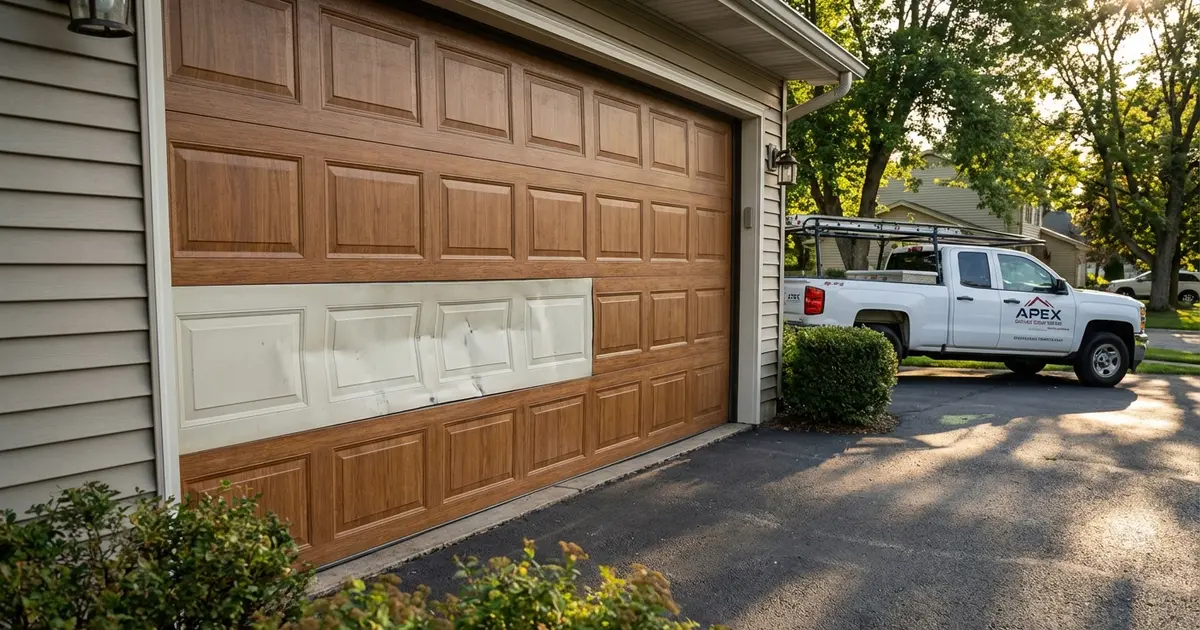
What Is a Garage Door Panel?
Most residential garage doors in the US are sectional doors — made up of 4–6 horizontal panels stacked on top of each other. Each panel is typically 18–21 inches tall and spans the full width of the door opening (8–16 feet wide). The panels are connected by hinges and run along metal tracks when the door opens and closes.
When one panel is damaged — by a car backing into it, a hailstorm, or physical impact — it doesn't always mean the entire door needs to go. In many cases, just the damaged section can be replaced. The key is finding a panel that matches your existing door in size, material, style, and color.
Understanding which panel is damaged also matters for safety and cost. Bottom panels are usually the most frequently damaged (and the safest to swap). Top panels near the spring system are more complex to replace.
Repair the Panel or Replace It?
Before jumping to full panel replacement, it's worth assessing whether the damage can be repaired instead. Minor dents on steel doors can sometimes be popped out or filled with auto-body filler and repainted. However, there are clear limits to what repair can realistically fix.
| Damage Type | Repair Possible? | Best Option |
|---|---|---|
| Small dent (under 4") | Often yes | Dent repair, ~$75–$150 |
| Large dent, crease, or crumple | Sometimes | Panel replacement |
| Panel cracked through | No | Panel replacement |
| Rust through the metal | No | Panel replacement or new door |
| Wood rot | Limited, small areas only | Panel replacement |
| Structural damage to frame | No | Full door replacement |
If the panel is cosmetically damaged but the door still operates safely, repair (dent removal and paint matching) may be a cost-effective short-term fix. If the panel is compromised structurally — cracked through, bent at a hinge point, or affecting the door's travel — replacement is the right call.
Garage Door Panel Replacement Cost in 2026
According to HomeAdvisor, panel replacement typically costs $250–$1,000 per panel, with most homeowners spending in the $300–$700 range for a standard steel sectional door panel. The total depends on the door's material, manufacturer, insulation level, and your local labor market.
| Cost Component | Typical Range |
|---|---|
| Panel (parts only) — standard steel | $100–$350 |
| Panel (parts only) — insulated steel | $150–$450 |
| Panel (parts only) — wood or custom | $300–$1,000+ |
| Panel (parts only) — aluminum or fiberglass | $200–$600 |
| Labor (installation) | $150–$400 |
| Hardware (hinges, rollers if needed) | $20–$80 |
| Emergency / same-day service | +$50–$150 |
These are national averages. Actual costs in high-cost-of-living metros (San Francisco, New York, Seattle) can run 30–50% higher. Budget metros and rural areas often come in at the lower end of the range.
Full Door Comparison
A new basic single-car steel garage door costs $500–$1,200 installed; double-car doors range from $900–$2,500 installed. If you're replacing two or more panels, it's worth getting a new-door quote alongside the panel quote to make an informed decision.
Regional Cost Breakdown
Panel replacement labor and parts pricing vary significantly across the US. These are approximate totals (parts + labor) for one mid-range steel panel on a standard sectional door:
| Region | Estimated Cost (1 Panel) |
|---|---|
| Southeast (TX, GA, FL) | $250–$550 |
| Midwest (OH, IL, MN) | $275–$600 |
| Mountain West (CO, AZ, NV) | $300–$650 |
| Northeast (NY, MA, NJ) | $350–$850 |
| West Coast (CA, OR, WA) | $375–$900 |
Emergency calls, after-hours service, and rural locations add to these base ranges. Always get 2–3 quotes before committing.
Garage Door Panel Material Options
If your existing door is discontinued or you're considering upgrading, understanding each material's characteristics helps you make the right long-term choice.
Steel Panels
The most common choice for US residential doors. Available in single-layer, double-layer (backed with polystyrene), and triple-layer (polyurethane foam core). Steel is durable, relatively affordable, and widely stocked by local dealers. It can dent from impact and rust if the finish is damaged and left untreated.
- Best for: Most homeowners — best combination of cost, availability, and durability
- Price: $100–$450 per panel (parts)
- Lifespan: 15–30 years with maintenance
Wood Panels
Beautiful and premium-looking, but the most maintenance-intensive option. Wood requires regular sealing, staining, or painting. It's susceptible to warping, swelling, and rot in humid climates. Custom wood panels can be expensive to source for replacement.
- Best for: Historic homes, carriage-house aesthetics, dry climates
- Price: $300–$1,000+ per panel (parts)
- Lifespan: 15–20 years with proper maintenance
Aluminum Panels
Lightweight and rust-resistant, aluminum is popular in modern and contemporary home designs. It dents more easily than steel and can be harder to source for replacement on older doors. Often used for full-view panel styles.
- Best for: Modern aesthetics, coastal environments (won't rust)
- Price: $200–$600 per panel (parts)
- Lifespan: 20–30 years
Fiberglass Panels
Fiberglass resists dents, rust, and moisture better than metal. It can yellow or become brittle with UV exposure over time. Replacement panels can be difficult to source from less common manufacturers.
- Best for: Coastal and high-humidity areas, homeowners wanting low maintenance
- Price: $200–$500 per panel (parts)
- Lifespan: 20–25 years
Panel Replacement vs. Full Door Replacement
This is the most important decision in the process. Replacing a single panel makes sense in some cases; in others, you're better off putting that money toward a new door. Here's a practical framework:
Replace Just the Panel When:
- Only one or two panels are damaged and matching panels are available
- The door is less than 10–12 years old and in good overall condition
- The rest of the door hardware (springs, cables, rollers, tracks) is in good shape
- The repair cost is clearly less than 40–50% of a new door's installed price
Replace the Whole Door When:
- The door model is discontinued and matching panels can't be sourced
- Three or more panels are damaged
- The door is 15+ years old with aging hardware throughout
- You want to upgrade insulation, style, or security
- Panel replacement quotes are approaching 60–70% of a new door's cost
- The frame or structural components are also compromised
A good garage door contractor will present both options honestly. Be wary of any company that doesn't at least mention the full-door alternative when it's relevant.
For a broader look at this decision, see our guide on how much garage door repair costs and when to repair vs replace your opener.
When to DIY vs Call a Pro
Panel replacement sits in a gray zone: the basic task of swapping a lower panel is physically achievable for a capable DIYer, but the surrounding systems (spring tension, cable routing, track alignment) add real injury risk — especially on upper panels.
| Task | DIY Feasibility | Notes |
|---|---|---|
| Minor dent repair on steel panel | ✅ Yes | Auto-body filler + primer + paint matching |
| Bottom panel swap (no spring work) | ⚠️ Possible | Requires disconnect from bottom bracket/cable; moderate skill |
| Middle panel swap | ⚠️ Risky | Must manage door weight; spring tension nearby |
| Top panel swap | ❌ Pro only | Near spring system; high injury risk |
| Panel swap on door with torsion springs | ❌ Pro only | Springs must be relaxed; specialized winding bars required |
| Wood panel refinishing (cosmetic) | ✅ Yes | Sanding, sealing, repainting |
DIY Tips (Bottom Panel Only)
If you're comfortable with mechanical work and the panel is the bottom section, here's the general process (consult manufacturer specs for your specific door):
- Disconnect the opener and manually lock the door in place before starting any work.
- Photograph hinge positions, roller placement, and cable attachment before disassembly.
- Remove the bottom bracket (where the lift cable attaches) — this is the critical connection point; cables hold tension from the spring system.
- Remove hinges and rollers connecting the damaged panel to adjacent panels.
- Slide the new panel into the track and re-attach hardware in reverse order.
- Test manually before reconnecting the opener. The door should feel balanced and travel smoothly.
Stop immediately if the cable feels taut beyond what you can safely manage. Call a pro — cable tension injuries are serious.
For guidance on related repairs, see our garage door off-track repair guide.
How to Source a Matching Replacement Panel
Finding the right panel is often harder than the installation itself. Here's how to track down a match:
Step 1: Identify Your Door's Brand and Model
Look for a label on the top inside of the door, on the track header, or on the original paperwork from when the door was installed. Common brands include Clopay, Amarr, Wayne Dalton, CHI, and Raynor. The model number is critical for sourcing the correct panel.
Step 2: Check Manufacturer Availability
Contact the manufacturer's customer service or dealer portal with your model number. Major brands like Clopay and Amarr maintain parts availability for 10–15 years after a model is discontinued.
Step 3: Try Local Dealers and Distributors
Local garage door dealers often have parts relationships with multiple manufacturers. They can source panels faster than online searches and can verify compatibility before ordering.
Step 4: Check Salvage and Surplus
For discontinued models, search Craigslist, Facebook Marketplace, and specialty building salvage companies in your area. You may find a door in good condition being discarded after a remodel, with usable matching panels.
When You Can't Find a Match
If panels are genuinely unavailable, you have two options: accept a visible mismatch (practical but ugly) or replace the entire door. On older doors especially, a full replacement often makes the most sense long-term.
Hiring a Panel Replacement Pro: What to Ask
Not every garage door company handles panel work the same way. Here's what separates a competent contractor from one that cuts corners:
- "Can you source a matching panel for my door?" — A good company will check manufacturer availability before quoting, not after taking a deposit.
- "What does the quote include?" — Confirm it covers parts, labor, hardware, and any adjustment/balancing after installation.
- "Will you also quote a full door replacement?" — A trustworthy contractor will offer both options and explain the trade-offs honestly.
- "What is your labor warranty?" — Most reputable companies offer 90 days to 1 year on labor.
- "Do you need to order the panel, or do you stock it?" — Stocked panels mean same-day or next-day service; ordered panels may take 1–2 weeks.
Always get a written quote that itemizes parts and labor. Avoid companies that refuse to put numbers in writing until they're on-site.
See also: how to choose a garage door repair company and our full garage door won't open troubleshooting guide.
Find Panel Replacement Pros Near You
Find trusted garage door pros in Chicago · Find trusted garage door pros in Phoenix · Find trusted garage door pros in San Antonio · Find trusted garage door pros in Charlotte · Find trusted garage door pros in Columbus
Frequently Asked Questions
How much does garage door panel replacement cost?
Most homeowners pay $250–$1,000 per panel for parts and labor. Costs vary based on door material (steel, wood, aluminum), panel size, whether the door is insulated, and local labor rates. Custom or wood panels can push costs higher, sometimes $500–$1,500 per panel.
Can I replace just one panel on my garage door?
Yes — if the door is not too old and matching panels are still available from the manufacturer. However, if the door is more than 10–15 years old, discontinued panels may be impossible to source, making partial replacement impractical. In that case, full door replacement often makes more financial sense.
Is it cheaper to replace a panel or the whole door?
Replacing one or two panels is usually cheaper than a full door if matching panels are available and the door is structurally sound. But replacing three or more panels, or working with a discontinued door model, often costs close to — or more than — a new door. Always get quotes for both options before deciding.
Can I replace a garage door panel myself?
Replacing a single lower panel on a sectional door is achievable for an experienced DIYer, but most panel swaps involve spring tension and cable systems that carry significant injury risk. Upper panel replacement is considerably more dangerous. Most pros recommend hiring a technician unless you have specific garage door experience.
How long does panel replacement take?
A single-panel swap on a standard sectional door typically takes 1–3 hours for a technician. If the surrounding hardware (hinges, rollers, cables) also needs adjustment, plan for up to half a day. Custom or wood panels that require finishing may take longer.
What causes garage door panels to get damaged?
The most common causes are vehicle impact (backing into the door), weather damage (hail, windstorm), rust and corrosion on steel panels, wood rot on timber doors, and physical impact from objects inside the garage. Panels can also crack or warp from extreme temperature cycling, especially on uninsulated aluminum doors.