Best Garage Door Brands Compared [2026 Guide]
Choosing a new garage door means navigating a crowded market of brands, materials, and price points. This guide cuts through the noise with an honest look at the top US garage door manufacturers — what they do well, where they fall short, and how to match a brand to your specific situation.
How the Garage Door Market Actually Works
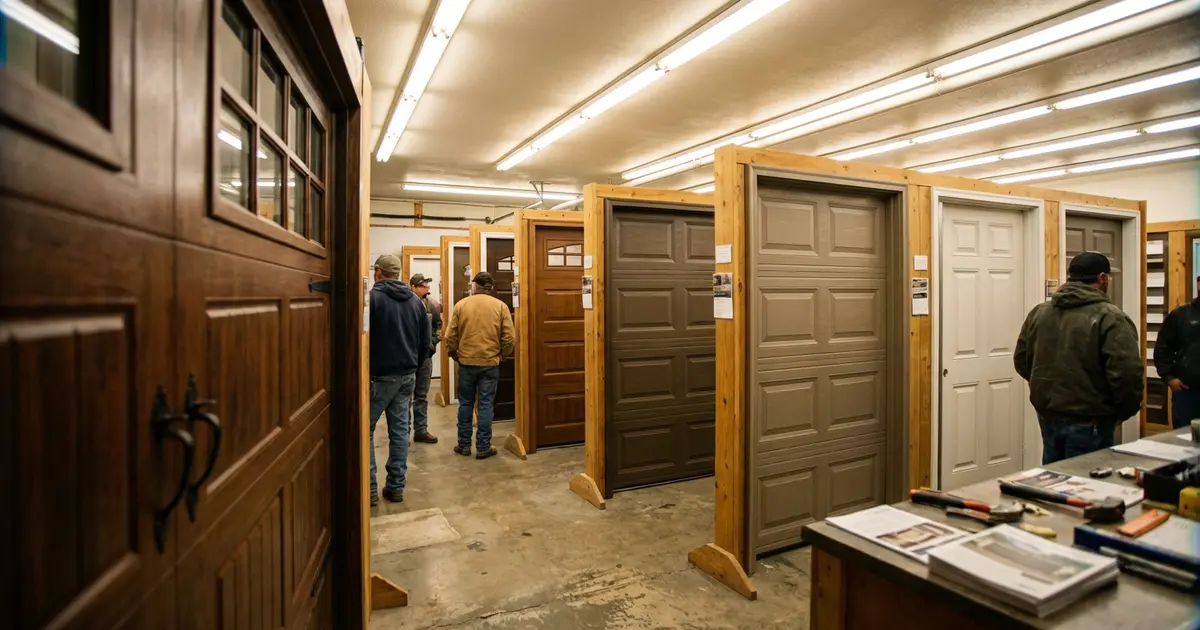
Before comparing brands, understand how garage doors are sold in the US. Unlike appliances you can comparison-shop at a big-box store, most quality garage doors are sold and installed through a dealer network of independent contractors. Manufacturers like Clopay, Amarr, and Wayne Dalton don't typically sell directly to consumers — they rely on regional dealers who stock, measure, order, and install.
This means brand availability varies by region. A brand with strong dealer coverage in the Southeast may have minimal presence in the Pacific Northwest. When comparing brands, always check which brands your local licensed installers actually carry — that matters more than any national ranking.
Home improvement stores (Home Depot, Lowe's) do sell some garage door lines — notably Clopay at Home Depot — but the selection is narrower than what a specialty dealer can access, and installation is typically subcontracted.
💡 Pro Tip: Before picking a brand, ask which brands your local garage door dealers carry and install daily. Local installer expertise matters more than national brand rankings.
Top Garage Door Brands Reviewed
1. Clopay — Best Overall
Clopay is the largest garage door manufacturer in North America and the most widely available through both specialty dealers and Home Depot. Founded in 1964 and owned by Griffon Corporation, Clopay manufactures doors at factories in Kentucky and Ohio and offers the broadest product range in the industry.
Product lines:
- Classic Steel: Entry-level single or double-layer steel doors. Best for those replacing an old door on a budget.
- Premium Series: Triple-layer steel with polyurethane insulation (R-12 to R-18). Good balance of performance and value.
- Canyon Ridge: Steel-backed ultra-grain composite overlay that realistically mimics wood. Popular for carriage-house designs without wood maintenance.
- Coachman: Composite overlay on a steel base, slightly more affordable than Canyon Ridge, still convincing wood look.
- Avante: Contemporary full-view aluminum and glass doors. Modern aesthetic, good for showrooms and modern homes.
- Reserve: Custom wood doors in real hemlock, oak, or cypress. Top-tier pricing.
| Clopay Line | Material | Insulation | Approx. Price (2-car, installed) |
|---|---|---|---|
| Classic Steel | Single-layer steel | None (R-0) | $1,200–$1,800 |
| Premium Series | Triple-layer steel | Polyurethane R-12–R-18 | $1,800–$3,200 |
| Canyon Ridge | Steel + composite overlay | Polyurethane R-12–R-18 | $2,800–$5,500 |
| Coachman | Steel + composite overlay | Polystyrene R-6–R-12 | $2,200–$4,000 |
| Avante | Aluminum + glass | None to R-10 | $3,000–$6,000+ |
| Reserve Wood | Real wood | Optional add-on | $4,000–$10,000+ |
Warranty: Lifetime limited on steel doors for original purchaser; 1-year on hardware. Canyon Ridge carries a 25-year finish warranty.
Best for: Homeowners who want broad selection, reliable dealer network, and a premium brand backed by a national company. Available at Home Depot for those who want a more direct purchasing path.
2. Amarr — Best Value
Amarr (owned by Entrematic Group) is Clopay's closest national competitor and is known for delivering solid build quality at a slightly lower price point. Amarr manufactures in Kernersville, NC and has a wide dealer network across the country.
Product lines:
- Stratford: Mid-range steel with ribbed or flat paneling, polystyrene or polyurethane insulation options.
- Lincoln: Contemporary raised-panel steel, good price-to-quality ratio.
- Heritage: Carriage-house style steel, stamped overlay for wood appearance.
- Hillcrest: Mid-range carriage-house design with better panel definition.
- Oak Summit: Fiberglass doors designed to look like real wood grain. Popular in coastal markets.
- Classica: High-end composite overlay doors, comparable to Clopay's Canyon Ridge.
| Amarr Line | Material | Insulation | Approx. Price (2-car, installed) |
|---|---|---|---|
| Stratford | Steel | Polystyrene R-6–R-12 | $1,400–$2,400 |
| Lincoln | Steel | Polyurethane R-12–R-16 | $1,600–$2,800 |
| Heritage | Steel carriage-house | Polyurethane R-12–R-16 | $2,000–$3,500 |
| Oak Summit | Fiberglass | Polyurethane R-12–R-16 | $2,500–$4,500 |
| Classica | Steel + composite overlay | Polyurethane R-16 | $3,000–$5,000 |
Warranty: Lifetime limited on steel panels; 10 years on paintability; 1-year on parts.
Best for: Homeowners looking for a reliable national brand at a somewhat lower price than Clopay's comparable lines. Amarr's dealer network is strong in the Southeast and Mid-Atlantic.
3. Wayne Dalton — Best for Insulation & Innovation
Wayne Dalton (owned by Overhead Door Corporation, which is owned by Sanwa Holdings) is headquartered in Mount Hope, Ohio. The brand is particularly known for its TorqueMaster spring system — an enclosed, safer alternative to traditional exposed torsion springs — and its high-performing insulated doors.
Product lines:
- Classic Steel: Entry-level steel doors, traditional raised-panel styles.
- ThermoStar: Polyurethane-insulated steel doors reaching up to R-17, among the highest in the industry.
- Classica: High-end composite overlay mimicking wood, with polyurethane insulation.
- Fiberglass: Coastal-market specialty — moisture-resistant, realistic wood grain.
| Wayne Dalton Line | Insulation | Approx. Price (2-car, installed) |
|---|---|---|
| Classic Steel | None to R-9 | $1,300–$2,200 |
| ThermoStar | Polyurethane up to R-17 | $2,000–$3,500 |
| Classica Composite | Polyurethane R-12–R-17 | $3,000–$5,500 |
| Fiberglass | Polyurethane R-12–R-16 | $2,800–$5,000 |
TorqueMaster system: Wayne Dalton's enclosed spring system housing the spring inside the torsion bar tube. This prevents spring debris if the spring breaks and removes the exposed coil hazard. It's a meaningful safety advantage for families with children, though replacement can be slightly more expensive than standard torsion springs.
Best for: Homeowners in cold climates who want maximum energy efficiency, or anyone who values the TorqueMaster spring safety system.
4. CHI Overhead Doors — Best for Carriage-House Style
CHI (Custom Home Ideas) is a privately-held manufacturer based in Arthur, Illinois, founded in 1981. CHI is best known for its carriage-house and craftsman-style designs, particularly its composite overlay doors that offer one of the more convincing wood looks at a competitive price.
CHI doors are sold exclusively through independent dealers, not home improvement chains. This means pricing and availability depend entirely on your local dealer network, but also means you're more likely to deal with a specialized installer rather than a subcontractor.
Notable product lines:
- Model 3283: Composite overlay, long-panel carriage-house design. Very popular.
- Model 5217: Steel carriage-house with wood-grain texture printing.
- Model 5283: Full composite overlay with flush or recessed panel options.
- Contemporary steel lines: Clean modern designs with full-view glass options.
Warranty: Lifetime limited on steel panels; lifetime on composite overlay finish.
Best for: Homeowners who want a distinctive carriage-house design and are willing to work with a specialty dealer. CHI punches above its price point on aesthetics.
5. Raynor Garage Doors — Best for Commercial/Heavy-Duty Residential
Raynor (Dixon, Illinois, founded 1944) manufactures both residential and commercial garage doors and is particularly strong in the Midwest dealer market. Raynor's commercial offerings are extensive, but their residential lines are competitive in build quality with Clopay and Amarr.
Residential highlights: Innovations, Aspen, Heritage styles. Polyurethane-insulated options reach R-17. Strong dealer relationships in Illinois, Wisconsin, Iowa, and surrounding states.
Best for: Homeowners in the Midwest where Raynor has strong dealer coverage, or anyone replacing a commercial door on a mixed-use property.
6. Hormann — Best Premium European Option
Hormann is a German manufacturer with a growing US presence, sold through specialty dealers. Hormann doors are built to higher tolerances than most US-manufactured doors and are particularly notable for their quieter operation, tighter sealing, and high-end aluminum and glass designs. They're also the parent company of the Sommer opener brand.
Hormann commands a price premium — typically 20–40% above comparable Clopay or Amarr lines — but the build quality is noticeably higher. If you want a door that feels solid in every sense and you have the budget, Hormann is worth considering.
Best for: Discerning homeowners with a higher budget who want European build quality or a contemporary aluminum/glass door.
7. Martin Door — Best Regional Brand (Mountain West)
Martin Door (Salt Lake City, Utah) is a regional manufacturer with strong dealer coverage in Utah, Colorado, Idaho, Nevada, and Arizona. Martin makes solid steel and wood composite doors at competitive prices and has a loyal following in the Mountain West region. Less relevant outside that geographic area.
Brand Pricing at a Glance
The following table summarizes installed cost ranges for a standard 16×7 ft double garage door across the major brands. All prices are US national averages including professional installation; regional variation applies (Northeast and West Coast typically 15–25% higher).
| Brand | Entry Level | Mid-Range | Premium | Luxury/Custom |
|---|---|---|---|---|
| Clopay | $1,200–$1,800 | $1,800–$3,000 | $3,000–$5,500 | $5,500–$12,000+ |
| Amarr | $1,100–$1,700 | $1,700–$2,800 | $2,800–$5,000 | $5,000–$8,000 |
| Wayne Dalton | $1,200–$1,900 | $1,900–$3,200 | $3,200–$5,500 | $5,500–$9,000 |
| CHI | $1,300–$2,000 | $2,000–$3,500 | $3,500–$5,500 | $5,500–$8,000 |
| Raynor | $1,200–$1,900 | $1,900–$3,200 | $3,200–$5,000 | $5,000–$7,500 |
| Hormann | $2,000–$3,000 | $3,000–$5,000 | $5,000–$8,000 | $8,000–$15,000+ |
| Martin Door | $1,100–$1,700 | $1,700–$3,000 | $3,000–$5,000 | $5,000–$7,000 |
Note: Single-car garage doors cost approximately 40–50% less than double-door pricing above. Prices include standard installation; custom openings, framing repairs, and spring upgrades add cost.
Regional Installation Cost Variation
| Region | Cost vs. National Average | Example Markets |
|---|---|---|
| Northeast | +15–25% | New York, Boston, Washington DC |
| West Coast | +15–20% | Los Angeles, San Francisco, Seattle |
| Southwest | At or -5% | Phoenix, Las Vegas, Albuquerque |
| Southeast | -5 to -10% | Atlanta, Charlotte, Jacksonville |
| Midwest | -5 to -10% | Chicago, Columbus, Indianapolis |
Steel vs Wood vs Aluminum vs Fiberglass
Material choice affects appearance, maintenance, insulation, durability, and cost. Here's what each material offers in practice.
Steel (Most Popular)
Steel accounts for over 80% of residential garage door sales in the US for good reason: it's affordable, durable, low-maintenance, and takes insulation well. Modern steel doors range from single-layer (thin steel skin, no insulation) to triple-layer (two steel skins with polyurethane foam injected between them).
- Pros: Strong dealer availability, widest style range, best insulation options, can be painted, low maintenance, resists warping and rot
- Cons: Dents from impact (though high-gauge steel is more resistant), can rust if paint is chipped and left untreated in coastal areas
- Best for: Most homeowners — the combination of value, performance, and style options is unmatched
Real Wood
Wood doors (Western red cedar, hemlock, redwood, oak) offer warmth and authenticity that no composite can fully replicate. They're the choice for high-end homes where aesthetics trump everything else.
- Pros: Unmatched natural beauty, can be stained or painted to any color, adds curb appeal and home value
- Cons: High maintenance (must be repainted or restained every 2–4 years), heavy (requires powerful opener), can warp in high-humidity climates, 2–3× the cost of comparable steel
- Best for: High-end homes in moderate climates, homeowners who want a showcase door and will commit to upkeep
Wood Composite / Composite Overlay
The fastest-growing category in residential garage doors. These doors use a steel or aluminum core covered by a molded composite overlay that realistically mimics the texture, grain, and appearance of wood. Clopay's Canyon Ridge, CHI's composite line, and Wayne Dalton's Classica are the leaders here.
- Pros: Looks like wood, resists warping, lower maintenance than real wood, can be painted, available with full polyurethane insulation
- Cons: 30–60% more expensive than equivalent steel doors, heavier than steel-only, overlay can chip if impacted
- Best for: Homeowners who want a wood look without wood maintenance costs, especially in humid or coastal climates
Aluminum
Aluminum doors are lighter than steel and don't rust — making them popular in coastal environments. Contemporary and full-view glass designs frequently use aluminum frames. The trade-off is denting: aluminum is noticeably softer than steel and shows damage from minor impacts.
- Pros: Rust-resistant (ideal for salt-air coastal areas), lightweight, modern clean look, framing for glass panels
- Cons: Dents easily, limited traditional style options, insulation is challenging, higher cost for tempered-glass designs
- Best for: Coastal homes, modern architecture, contemporary full-view glass designs
Fiberglass
Fiberglass (offered by Amarr Oak Summit, Wayne Dalton, and others) is primarily a coastal and Southern market product. It won't rot, rust, or warp, and can be molded into realistic wood grain textures. It's not as common nationally but solves specific problems in harsh environments.
- Pros: Immune to rot, rust, and moisture damage; realistic wood-grain textures; lighter than wood
- Cons: Can crack or yellow over time in harsh UV environments, limited dealer availability, fewer style options than steel
- Best for: High-humidity coastal markets (Florida, Gulf Coast, Pacific Northwest rain shadow)
Insulation and R-Value by Brand
Garage door insulation matters most if your garage is attached to your home (heat and cold transfer through the shared wall matters), if you use the garage as a workspace, or if you have a living space above the garage. For a detached garage used only for storage, insulation adds cost with minimal payoff.
Understanding R-Value
R-value measures thermal resistance — the higher the number, the better the insulation. A single-layer steel door has an R-value of essentially 0. Here's how the insulation types compare:
| Construction Type | R-Value Range | Description |
|---|---|---|
| Single-layer steel | R-0 to R-2 | Plain steel skin, no insulation. Budget doors only. |
| Two-layer with polystyrene | R-6 to R-9 | EPS foam panels added to inside of steel. Better than nothing. |
| Three-layer with polystyrene | R-9 to R-13 | Steel-foam-steel sandwich. Good entry-level insulated door. |
| Three-layer with polyurethane | R-12 to R-18 | Injected foam fills every cavity. Best performance; also stiffer and quieter. |
Polyurethane-insulated doors are stiffer than polystyrene doors (the injected foam bonds the steel layers together) and quieter in operation. They also cost $200–$600 more for a two-car door. In climates with temperature extremes or if the garage is adjacent to living space, the upgrade is worth it.
Top Insulated Doors by Brand
| Brand / Model | Max R-Value | Insulation Type | Approx. Price Premium |
|---|---|---|---|
| Wayne Dalton ThermoStar | R-17 | Polyurethane | +$400–$700 |
| Clopay Premium Series | R-18 | Polyurethane | +$350–$600 |
| Clopay Canyon Ridge | R-18 | Polyurethane | +$400–$800 |
| Amarr Classica | R-16 | Polyurethane | +$350–$600 |
| CHI Model 3283 | R-16 | Polyurethane | +$350–$550 |
| Raynor Innovations | R-17 | Polyurethane | +$350–$600 |
Warranty Comparison
Warranty terms matter — a door with a lifetime panel warranty and one-year hardware warranty isn't the same as a comprehensive lifetime warranty. Here's what the major brands actually offer.
| Brand | Steel Panels | Paint/Finish | Hardware | Notes |
|---|---|---|---|---|
| Clopay | Lifetime limited | 25 years (Canyon Ridge) | 1 year | Lifetime = original purchaser only; non-transferable |
| Amarr | Lifetime limited | 10 years paintability | 1 year | Standard residential steel doors |
| Wayne Dalton | Lifetime limited | 10–25 years | 1 year | TorqueMaster spring has separate warranty |
| CHI | Lifetime limited | Lifetime (composite) | 1 year | Composite overlay finish warranty is strong |
| Raynor | Lifetime limited | 10 years | 1 year | Some commercial lines have separate terms |
| Hormann | 5–10 years | 10 years | 2 years | European warranty terms; shorter panel but stronger build |
Important: "Lifetime limited" warranties are common in the industry but should be read carefully. They typically cover manufacturing defects in panels — not cosmetic damage from dents, scratches, or impact. Hardware (rollers, springs, hinges) wears out and is almost universally excluded from lifetime coverage.
Find trusted garage door installers in Atlanta, Chicago, and Minneapolis to get quotes on any of the brands above.
Best Brand by Homeowner Goal
| Your Goal | Best Pick | Why |
|---|---|---|
| Best overall value | Amarr (mid-range) or Clopay Classic Steel | Reliable national brands, competitive pricing, wide dealer network |
| Best insulation (cold climate) | Wayne Dalton ThermoStar or Clopay Premium | Highest R-values in class, polyurethane foam standard |
| Best carriage-house look | CHI Composite or Clopay Canyon Ridge | Most realistic wood overlay, better curb appeal per dollar |
| Coastal/humid climate | Amarr Oak Summit (fiberglass) or aluminum | No rust, no rot, moisture-resistant construction |
| Modern/contemporary design | Clopay Avante or Hormann glass/aluminum | Full-view glass designs, clean lines, contemporary profiles |
| Safety-conscious | Wayne Dalton (TorqueMaster springs) | Enclosed spring system reduces injury risk |
| Premium/showpiece | Hormann or Clopay Reserve wood | Top build quality, premium materials |
| Best Home Depot purchase | Clopay | Only major brand sold through Home Depot with installation services |
DIY vs Professional Garage Door Installation
Installing a garage door is a project with real danger. New door installation is not a typical DIY project — this is worth understanding before deciding.
What Makes It Dangerous
A standard two-car garage door weighs 130–200+ lbs. The torsion spring that counterbalances that weight stores a significant amount of mechanical energy. A spring that breaks under tension — or is installed incorrectly — can cause serious injury. This is the primary reason professional installation is strongly recommended.
What a Professional Installation Includes
- Removal and disposal of old door and hardware
- Track and hardware installation (properly leveled and plumb)
- Spring installation and tensioning (torsion or extension)
- Opener reconnection or new opener installation
- Balance testing and safety reversal adjustment
- Weatherstripping installation
Professional installation typically runs $300–$600 for labor on a standard door. Many dealers include installation in their door pricing; clarify whether you're getting an installed price or a door-only price.
When DIY Makes Sense
The one scenario where DIY is reasonable: replacing panels on an existing door where the springs and hardware are staying in place, and no spring work is involved. Panel-only replacement (if your brand still carries matching panels) is a straightforward job that a handy homeowner can handle safely.
For a full door replacement, the professional installation cost is worth it for safety, warranty protection (many manufacturers void warranties on self-installed doors), and time savings.
Find trusted local installers in Dallas, Las Vegas, and Charlotte for installation quotes.
How to Buy a Garage Door Without Getting Ripped Off
The garage door industry has its share of unscrupulous contractors. Here's how to shop smart:
1. Get Three Quotes — All Installed
Always request installed pricing, not door-only pricing. The total cost (door + hardware + installation + disposal of old door) is what matters. Comparing door-only prices between dealers is meaningless because installation costs vary widely.
2. Ask What Gauge Steel
Steel doors are measured in gauge — lower number = thicker steel. Budget doors often use 27–28 gauge steel (thin, dents easily). Mid-range doors use 25–26 gauge. Premium doors use 24 gauge. Ask specifically what gauge the door is. A dealer who can't or won't answer is a red flag.
3. Verify the Spring Type and Warranty
Ask whether the installation includes torsion or extension springs and what the spring cycle rating is. Standard springs are rated for 10,000 cycles. High-cycle springs (25,000–100,000 cycles) cost more but last significantly longer. For a door used 4× per day, standard springs last ~7 years; high-cycle springs 17–35+ years.
4. Check the Dealer's License and Insurance
Garage door contractors need to be licensed in most states. Ask for license number and proof of general liability insurance. An unlicensed contractor who damages your property or is injured on your property creates real legal and financial exposure.
5. Don't Buy Openers from Door Companies at Full Price
Many garage door companies sell openers at full retail as an add-on. You can often buy the exact same LiftMaster, Chamberlain, or Genie opener at Home Depot or Amazon for 20–40% less. Buy separately and ask the installer to hang it for a reasonable labor fee.
6. Understand What "Lifetime Warranty" Actually Covers
As noted above — lifetime warranties on steel panels don't cover dents, scratches, or cosmetic damage. If your primary concern is longevity and appearance, ask specifically about the finish warranty (rust, peeling) and what the process is for warranty claims.
Related Guides
Find Garage Door Installation Pros Near You
Find trusted garage door pros in Atlanta · Chicago · Dallas · Las Vegas · Minneapolis
FAQs
What is the best garage door brand in the US?
Clopay is widely considered the top overall garage door brand in the US, offering the widest selection across all price points with strong dealer support and a lifetime warranty on steel doors. Amarr is the best value pick for budget-conscious homeowners, while Wayne Dalton leads in energy efficiency with its ThermoStar and Classica lines. The "best" brand ultimately depends on your budget, style preference, and local installer availability.
How much does a new garage door cost installed in 2026?
A new single garage door installed costs $800–$2,500 for a standard steel door. A double (two-car) garage door runs $1,200–$4,500 installed. Premium wood, glass, or custom carriage-house doors can reach $5,000–$10,000+. Labor typically adds $300–$600 to the door cost. These ranges cover materials and professional installation by a licensed garage door contractor.
Are Clopay and Amarr the same company?
No. Clopay is owned by Griffon Corporation. Amarr is owned by Entrematic Group (formerly owned by Trinity Industries). They are separate competing companies. However, both distribute their doors through independent garage door dealers and contractors across the US, and both have extensive national dealer networks.
How long do garage doors last?
A quality steel garage door typically lasts 20–30 years with proper maintenance. Wood doors last 15–25 years but require more upkeep (painting, sealing). Aluminum doors last 20+ years but dent more easily. The door itself often outlasts the opener (which typically lasts 10–15 years) and springs (7,000–20,000 cycles depending on type). Annual lubrication and occasional panel touch-up significantly extend door lifespan.
Should I buy a door from the same brand as my opener?
No — garage doors and openers are separate systems that do not need to match brands. Your opener attaches to any standard residential door via a trolley-and-rail system. The only consideration is door weight: make sure your opener's rated lift capacity (typically 7/10 hp or 1 hp) is sufficient for your door's weight. A heavy insulated or solid wood door may require a more powerful opener.
What is the best insulated garage door brand?
Wayne Dalton's Classica and ThermoStar lines offer some of the highest R-values (up to R-17) of any US garage door brand. Clopay's Coachman and Canyon Ridge collections use polyurethane foam insulation and reach R-12 to R-18. Amarr's Stratford and Hillcrest lines are competitive at R-12 to R-16. For a climate-controlled garage or living space above, any of these polyurethane-insulated doors perform well.