How Often Should You Service Your Garage Door? Complete Maintenance Schedule
Your garage door is the largest moving part of your home and one of the most mechanically complex. It cycles thousands of times per year under real mechanical stress. Without regular maintenance, that wear accumulates silently — until a spring snaps, a cable frays, or the door simply refuses to open on a cold January morning.
This guide gives you a complete, practical maintenance schedule — what to do yourself each month, what to check seasonally, and what a professional technician should handle annually.
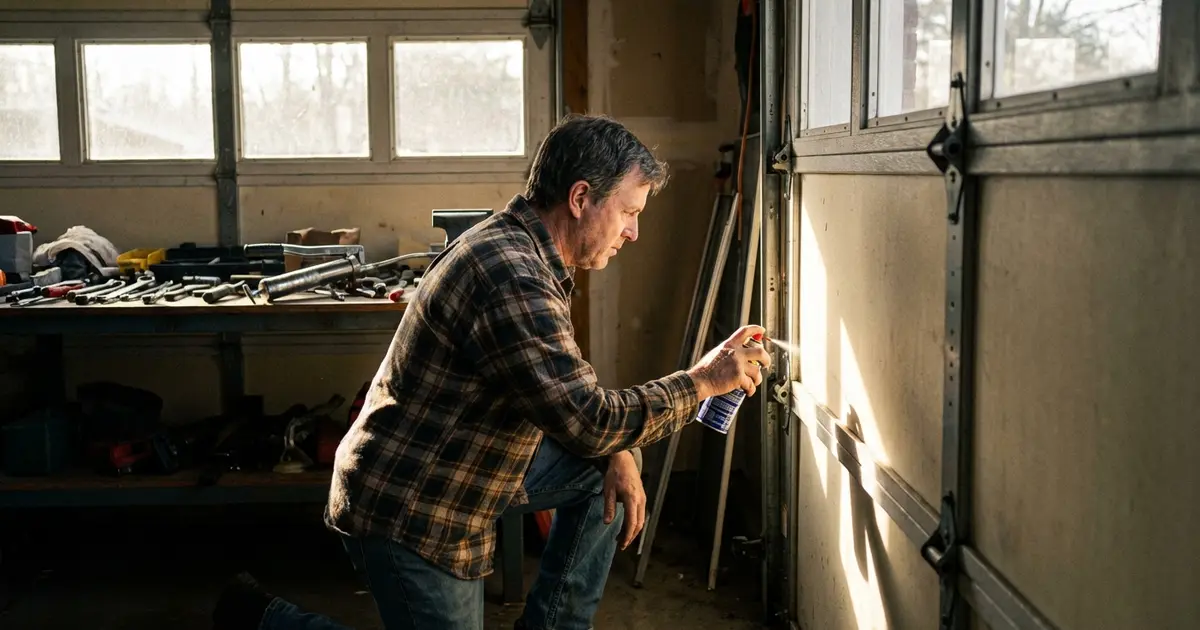
Why Garage Door Maintenance Matters More Than You Think
The average residential garage door opens and closes 3–5 times per day — roughly 1,500 cycles per year. In a busy household, that number climbs to 6–10+ cycles daily. Each cycle puts mechanical stress on every component: springs, cables, rollers, hinges, tracks, and the opener motor.
Garage door springs are rated for a finite number of cycles — typically 10,000 cycles for standard torsion springs (roughly 7 years at average use). High-cycle springs rated for 25,000–50,000 cycles are available but rarely installed by default. Without inspection, you won't know when you're approaching the end of that lifespan until the spring fails — usually with a loud bang and a door that won't budge.
The Cost Math
Annual professional tune-ups cost $75–$150. A single emergency service call — same-day, after-hours — typically runs $200–$400 just for the visit, before parts. A broken torsion spring replacement adds another $180–$350. A frayed cable that snaps adds $100–$300.
One preventable emergency repair often costs more than five years of tune-ups combined. Beyond money, a door that fails when you're leaving for work, picking up kids, or arriving home after midnight is a significant lifestyle disruption — and a potential safety hazard.
What Maintenance Actually Does
A consistent maintenance schedule accomplishes three things:
- Catches wear early — A technician who inspects your springs annually can spot coil separation, corrosion, or uneven tension before the spring snaps.
- Reduces friction and wear — Proper lubrication cuts the mechanical resistance that strains rollers, bearings, and the opener motor. A well-lubricated door runs quieter and lasts longer.
- Verifies safety systems — Auto-reverse sensors, force limits, and manual disconnect cords must be tested regularly. These features protect children and pets from injury.
✅ Key Takeaway: A 15-minute monthly visual check and quarterly lubrication prevents most emergency service calls. Set a recurring reminder — consistent small maintenance beats expensive reactive repairs.
Monthly Maintenance Tasks (15 Minutes, No Tools Required)
These are quick checks that any homeowner can do monthly without any technical knowledge or tools. Add them to your mental checklist the first weekend of each month.
1. Visual Inspection of Hardware
Stand inside your garage with the door closed and look at the hardware on both sides. You're scanning for:
- Loose bolts on rollers, hinges, and track brackets (they'll look tilted or show visible gaps)
- Bent or dented track sections (look for flat spots or crimps in the vertical and horizontal track sections)
- Rust on springs, cables, or hardware (surface rust is manageable; deep rust is a replacement signal)
- Fraying cables — look at the bottom corners where the lift cables attach to the bottom bracket; loose strands are a warning sign
- Spring coil gaps — a broken torsion spring often shows a visible gap of 2–4 inches in the coil above the door
This whole inspection takes 5 minutes. If you spot anything unusual, stop using the door until a technician assesses it.
2. Balance Test
The balance test reveals whether your springs are properly calibrated to the door's weight. Perform it once a month:
- Close the door fully
- Pull the emergency release cord (the red handle hanging from the opener rail) to disconnect the opener
- Manually lift the door to approximately waist height (about 3–4 feet off the ground)
- Let go
Pass: The door stays in place (or moves less than 1 inch in either direction). This means the springs are properly balanced to the door's weight.
Fail: The door falls toward the floor (under-tensioned springs) or rises toward the ceiling (over-tensioned springs). Either condition means the springs need adjustment — do not attempt this yourself.
Reconnect the opener when done (pull the emergency cord toward the door until you hear it click back into the trolley).
3. Auto-Reverse Safety Test
This test verifies that your opener's safety auto-reverse feature is working correctly — the system required to reverse the door if it contacts an object while closing.
- Place a 2x4 piece of lumber flat on the ground, centered under the door
- Press the wall button or remote to close the door
- The door should contact the 2x4 and reverse direction within 2 seconds
If the door does not reverse, the opener's mechanical force limit needs adjustment. This is a technician adjustment — your opener has force-limit dials or settings (check your opener manual) but setting them incorrectly can make the problem worse.
Also test the photo eye sensors separately: while the door is closing, wave your hand through the sensor beams. The door should immediately reverse. If it doesn't, the sensors need attention (see our safety sensor troubleshooting guide).
4. Listen During Operation
Normal garage door sounds: smooth humming of the opener, light clicking as the door articulates through sections.
Abnormal sounds that warrant attention:
- Grinding or scraping — metal-on-metal contact; could be rollers, track debris, or a worn bearing
- Popping or snapping — cable or spring stress; the cable could be catching on a drum, or a spring coil is binding
- Loud bang at rest — the single most dramatic sound; almost always a torsion spring failure
- Squealing — friction from dry rollers or hinges; lubrication typically resolves this
- Rattling or vibrating — loose hardware; tighten bolts on hinges, rollers, and track brackets
Seasonal Maintenance (Spring and Fall — 30 Minutes Each)
Do a more thorough inspection and lubrication twice a year — ideally in early spring (before summer heat) and early fall (before winter cold). Both seasons bring temperature extremes that stress garage door components.
Lubrication (Full System)
Use a white lithium grease spray or dedicated garage door lubricant. Apply to:
- Torsion spring coils (spray along the length of the spring)
- Extension springs if present
- Roller stems and bearings (not the nylon wheel itself if you have nylon rollers)
- All hinge pivot points
- The pulley bearings (extension spring systems)
- The bearing plates at each end of the torsion bar
- The opener rail (a thin strip along the top rail — check your opener manual; some chain-drive rails need grease, belt-drive rails typically do not)
Do NOT lubricate: The tracks themselves. Rollers are designed to roll on clean, dry tracks. Greased tracks attract dirt, cause buildup, and can cause the rollers to skip or stick.
Hardware Tightening
With a 3/8" ratchet and socket set, go around the door and tighten all visible bolts on:
- Roller brackets (8–12 on a standard door)
- Hinges (typically 3–4 per section)
- Track mounting brackets (where the track attaches to the wall)
- Bottom brackets (bottom corners where cables attach)
Hardware loosens from the vibration of thousands of cycles. This is a 15-minute job that reduces noise and prevents component failure caused by loose connections.
Weatherstrip Inspection
Check the bottom seal (the rubber strip along the door's bottom edge) and the side/top weatherstripping for:
- Cracks, brittleness, or chunks missing (rubber degrades with UV and temperature cycling)
- Compression failure (weatherstrip that no longer seals against the floor or frame)
- Gaps where light or weather can enter
Weatherstrip replacement is a simple DIY job. A replacement bottom seal costs $20–$50 at any home improvement store and typically just slides into a retainer channel.
Track Cleaning
Wipe down the inside of the vertical and horizontal track sections with a dry rag. Remove any dirt, debris, or old lubricant buildup. Do not use solvent on tracks with rubber-coated rollers, as it can degrade the rubber.
Opener Limit and Force Check
Re-run the auto-reverse test each season. Temperature changes can affect how the door moves — a door that passed in spring may fail in winter if the weatherstrip has stiffened enough to add significant friction to the closing cycle.
💡 Pro Tip: A $100–$150 annual professional tune-up is the single highest-ROI garage door maintenance. It catches spring wear, cable fraying, and alignment issues before they become $400 emergency repairs.
Annual Professional Tune-Up (What a Technician Does)
Even with good DIY maintenance, a professional tune-up once per year is worth the investment. Technicians have the tools, training, and experience to catch issues that aren't visible to the untrained eye — and they can safely adjust spring tension, which homeowners should not attempt.
What a Pro Inspects and Adjusts
| Task | Why It Matters | DIY-Safe? |
|---|---|---|
| Spring tension adjustment | Balances door weight; prevents premature opener motor wear | ❌ Pro only |
| Cable inspection and tension check | Catches fraying before failure | ⚠️ Inspect only; adjustment is pro only |
| Roller inspection and replacement | Worn rollers create noise and friction | ✅ DIY-possible for roller swap |
| Full lubrication | Reduces wear on all moving parts | ✅ DIY-safe |
| Opener force and limit adjustment | Ensures door reverses correctly; prevents motor damage | ⚠️ Basic settings only; consult manual |
| Photo eye alignment | Ensures safety sensors are functioning | ✅ DIY-safe |
| Track alignment and plumb check | Misaligned tracks cause rollers to bind or jump | ⚠️ Minor adjustments only |
| Weatherstrip inspection | Air sealing and pest exclusion | ✅ DIY-safe for replacement |
| Hardware tightening (full) | Prevents noise, binding, and hardware fatigue | ✅ DIY-safe |
| End-of-life spring assessment | Predicts remaining spring life to prevent unexpected failure | ❌ Requires pro experience |
How to Find a Reliable Tune-Up Provider
Look for a company that:
- Charges a flat rate for the tune-up (not a "free inspection" that becomes a high-pressure sales call)
- Is licensed and insured in your state
- Provides a written summary of findings, not just a verbal report
- Offers an itemized quote if additional repairs are needed — before doing the work
See our guide to choosing a garage door repair company for a full checklist.
Garage Door Lubrication Guide
Proper lubrication is the single highest-impact DIY maintenance task. It reduces friction, eliminates squealing and grinding noises, extends component life, and reduces load on the opener motor. Do it every six months.
What You Need
- White lithium grease spray — best for springs, hinges, and metal rollers; sticks better than oil in all weather
- Dedicated garage door lubricant (e.g., 3-IN-ONE Garage Door Lube) — works well across all components
- Rags — for wiping up excess
Cost: $8–$15 for a can of lubricant at any hardware store. One can lasts 3–4 applications on a standard single door.
Lubrication Point-by-Point
| Component | How to Lubricate | How Often |
|---|---|---|
| Torsion springs | Spray along full length of the coil; open and close door to work it in | Every 6 months |
| Extension springs | Spray along the length of both springs | Every 6 months |
| Metal rollers | Apply to the stem and bearing; spin manually to distribute | Every 6 months |
| Nylon rollers | Lubricate stem and bearing only — not the nylon wheel | Every 6 months |
| Hinges | Apply a small amount to each pivot point on every hinge | Every 6 months |
| Bearing plates | Spray the center bearing on both ends of the torsion bar shaft | Annually (pro) |
| Pulley axles (extension) | Spray the axle/bearing on each pulley | Every 6 months |
| Opener rail | Chain: light grease along chain links. Belt: wipe clean, no lube needed | Annually |
| Tracks | Wipe clean with dry rag — do NOT grease | Every 6 months |
Professional Tune-Up Costs by Region
A standard garage door tune-up (inspection + lubrication + adjustment + auto-reverse test) ranges from $75–$150 nationally, with meaningful regional variation driven by labor costs and market competition.
| Region | Typical Tune-Up Cost | Annual Plan (2 visits) |
|---|---|---|
| Northeast (NY, MA, CT, NJ) | $110–$150 | $175–$250 |
| Southeast (FL, GA, NC, SC) | $75–$115 | $130–$190 |
| Midwest (OH, IL, MI, MN) | $80–$120 | $140–$200 |
| Southwest (TX, AZ, NM, NV) | $75–$115 | $130–$190 |
| West Coast (CA, OR, WA) | $100–$150 | $165–$240 |
| Mountain (CO, UT, ID, MT) | $85–$130 | $145–$210 |
Note: Some companies offer "free inspections" but then quote aggressively on repairs. A flat-rate tune-up from a reputable company is usually a better value. If a tech finds an issue during the tune-up, ask for a written itemized quote and get a second opinion on anything over $300.
Additional Repair Costs During Tune-Up
If the technician finds parts that need replacement during the annual inspection, here are typical cost ranges for common parts:
| Part | Parts Cost | Installed (Parts + Labor) |
|---|---|---|
| Rollers (set of 10–12) | $20–$80 | $75–$200 |
| Hinges (set) | $15–$50 | $75–$150 |
| Bottom weatherseal | $20–$50 | $75–$150 |
| Torsion spring (single) | $50–$120 | $180–$350 |
| Cables (pair) | $20–$60 | $100–$300 |
| Opener tune/force adjust | $0 (included in tune-up) | $0 |
DIY vs Professional Maintenance: What's Safe to Do Yourself
✅ Safe for DIY Homeowners
- Lubrication of springs, rollers, hinges (using the correct lubricant)
- Hardware tightening (nuts and bolts on roller brackets, hinges, tracks)
- Auto-reverse testing (2x4 test and photo eye wave test)
- Balance test (disconnect opener, manually lift to waist height)
- Weatherstrip replacement (bottom seal and side seals)
- Cleaning tracks with a dry rag
- Photo eye cleaning and basic alignment (see our sensor guide)
- Remote battery replacement and reprogramming
❌ Call a Professional
- Spring tension adjustment or replacement — Torsion springs hold 100–300 lbs of mechanical energy. Tools and training are required. Injuries from spring failures are well-documented and can be fatal.
- Cable replacement — Cables connect the spring system to the door. Working near wound springs without proper tools is dangerous.
- Track replacement — Requires understanding of door alignment and spring tension interaction.
- Any repair after a sudden failure — If the door suddenly dropped, a spring snapped, or a cable broke, call a pro before using the door again.
For more detail on this decision, read our opener repair vs replace guide and the related section in our garage door repair cost article.
Warning Signs: Don't Wait for the Annual Visit
Between scheduled maintenance, these signs mean you should stop using the door and call a technician immediately:
- 🚨 Loud bang when the door is at rest or during operation — likely a broken torsion spring
- 🚨 Door drops suddenly on one side — possible cable failure
- 🚨 Visible gap in the spring coil — spring has broken
- 🚨 Cable lying on the garage floor — cable has snapped
- 🚨 Door falls when released manually at waist height — spring failure
- ⚠️ Door moves very slowly or strains visibly — spring tension loss, friction issue, or opener motor stress
- ⚠️ Grinding or scraping that wasn't there before — roller or track issue
- ⚠️ Door reverses immediately when trying to close — sensor or limit setting issue
- ⚠️ Auto-reverse fails the 2x4 test — force settings need immediate adjustment
How Maintenance Affects Garage Door Lifespan
A garage door system has multiple components with different lifespans. Maintenance can extend some significantly:
| Component | Typical Lifespan (No Maintenance) | With Regular Maintenance |
|---|---|---|
| Standard torsion springs (10,000 cycles) | 5–7 years | 7–10 years (lubrication reduces wear) |
| High-cycle springs (25,000 cycles) | 15–20 years | 20+ years |
| Nylon rollers | 5–7 years | 10–12 years |
| Steel rollers (lubricated) | 10–15 years | 15–20 years |
| Cables | 7–12 years | 10–15 years |
| Opener motor | 10–15 years | 15–20 years (reduced load) |
| Steel door panels | 20–30 years | 30+ years (rust prevention) |
The biggest lifespan impact is on the opener motor: an improperly balanced door (failed springs or worn rollers adding friction) forces the motor to work harder on every cycle, significantly shortening its life. Regular spring and roller maintenance often extends opener life by 5+ years.
Find a Garage Door Maintenance Pro Near You
An annual tune-up is most affordable when you schedule it proactively — not during an emergency. Find trusted local technicians in your area:
- Find trusted garage door pros in Houston
- Find trusted garage door pros in Denver
- Find trusted garage door pros in Charlotte
- Find trusted garage door pros in Minneapolis
- Find trusted garage door pros in Las Vegas
Or browse all cities to find technicians in your area.
Frequently Asked Questions
How often should a garage door be serviced?
Most garage doors should receive a professional tune-up once a year. In addition, homeowners should perform a monthly visual check and basic safety tests (balance test, auto-reverse test) and lubricate moving parts every six months. High-use doors — in households that cycle the door 6–10+ times per day — may benefit from a professional inspection every six months.
What does a garage door tune-up include?
A professional tune-up typically includes: inspection and adjustment of spring tension, lubrication of all moving parts (rollers, hinges, bearings, springs, tracks), inspection of cables for fraying or wear, checking and adjusting the opener force settings, testing the auto-reverse safety feature, inspecting weatherstripping, tightening all hardware, and a full balance test. Expect the appointment to take 45–90 minutes.
How much does a garage door tune-up cost?
A standard annual tune-up typically costs $75–$150 depending on your region and provider. Some companies offer annual maintenance plans (often $100–$200/year) that include one or two visits plus priority service scheduling. This is one of the best-value maintenance investments for a garage door system — catching a worn spring or fraying cable early can save $400–$1,000 in emergency repair costs.
What are the signs that a garage door needs immediate service?
Do not wait for the annual visit if you notice: loud grinding, popping, or scraping noises during operation; the door moving unevenly (one side faster than the other); visible gaps in a spring or a cable coiled on the floor; the door reversing immediately when you try to close it; or the door failing the balance test (rising or falling after you manually lift it to waist height). These are warning signs of imminent component failure.
Can I do garage door maintenance myself?
Yes — with important exceptions. Homeowners can safely perform lubrication, visual inspections, hardware tightening, weatherstrip replacement, and auto-reverse testing. However, spring adjustment and cable tension work should always be done by a licensed technician. Torsion springs are under hundreds of pounds of force; an error can cause serious injury or death. For everything else on the checklist, a handy homeowner needs about 30–60 minutes and basic tools.
What lubricant should I use on a garage door?
Use a white lithium grease spray or a dedicated garage door lubricant (such as 3-IN-ONE Garage Door Lube). Apply it to: torsion or extension springs, rollers (on the bearing, not the nylon wheel if nylon rollers), hinges, and the pulley bearings if you have extension springs. Do NOT use WD-40 — it is a solvent and degreaser, not a lubricant, and will wash away any existing lubrication and can attract dirt. Also avoid greasing the tracks; the rollers are designed to roll on clean tracks.
How do I test my garage door auto-reverse safety feature?
The auto-reverse (also called the auto-stop or reversal) test is simple. Place a 2x4 piece of lumber flat on the ground directly under the center of the door. Press the close button. The door should contact the board and automatically reverse direction within 2 seconds. If it does not reverse — or if it crushes the board and keeps going — the opener's force sensitivity needs immediate adjustment by a technician. This test should be done monthly. Do not skip it; this feature protects children and pets from being trapped under a closing door.