Garage Door Bottom Seal Replacement Guide
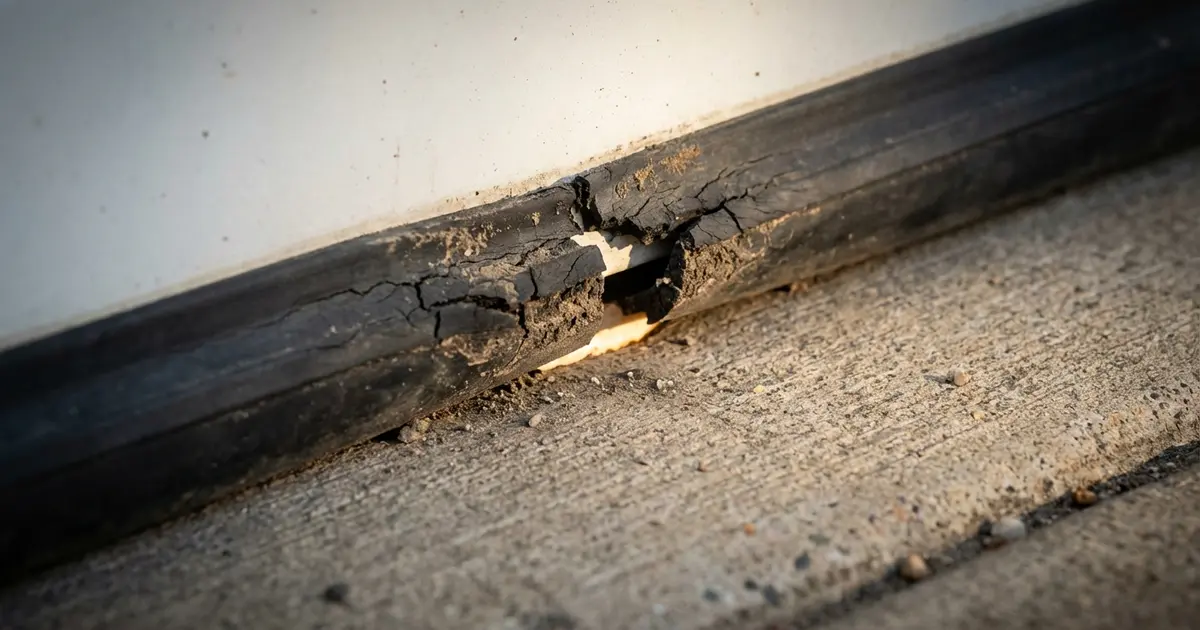
The garage door bottom seal is the most overlooked — and one of the most important — parts of your garage door system. A failed seal lets in water, pests, cold air, and garage fumes. Replacement is one of the easiest and cheapest garage door repairs most homeowners can do themselves in under an hour.
Why the Garage Door Bottom Seal Matters
The bottom of a closed garage door sits against the floor — but not perfectly. Even on a smooth concrete slab, there are subtle variations in floor level, debris, and the door's own position. Without a flexible seal to bridge these gaps, the bottom edge of the door is effectively open to whatever is outside.
What a Failed Bottom Seal Lets In
- Water: Rain-driven water runs under the door and pools on the garage floor, eventually finding cracks in the slab or seeping into finished areas. In winter, this water can freeze and damage the slab edge.
- Pests: Mice can squeeze through a gap as small as a dime (about ¼ inch). Insects, spiders, and other pests routinely enter through degraded or missing bottom seals. A good seal is the first line of rodent defense for an attached garage.
- Drafts and cold air: In an attached garage, air infiltration under the door is a direct path from outside temperatures to your living space. An unsealed door can account for 15–30% of the total air infiltration of an unfinished garage.
- Debris and dust: Leaves, dirt, and grit blow in constantly through a gap — which is manageable outside but can damage floors, tools, and stored items.
- Carbon monoxide: For attached garages, any infiltration path from garage to house is a carbon monoxide risk if vehicles are warming up. A sealed bottom edge is part of a complete CO protection strategy.
How Long Does a Bottom Seal Last?
Most standard vinyl or rubber bottom seals last 3–7 years under normal use. Factors that accelerate wear include:
- Extreme temperature swings (vinyl becomes brittle in cold)
- UV exposure on south-facing garages
- Heavy use (garage doors that cycle 10+ times per day)
- Rough or abrasive floor surfaces
- Ice or snow being pushed across the seal surface
Premium EPDM rubber seals in moderate-use, protected garages can last 10+ years. Inspect your seal annually as part of a garage door tune-up.
Types of Garage Door Bottom Seals
There are five main seal profiles available for residential garage doors. Each has different performance characteristics and installation requirements:
T-Style (T-End) Seal
The most common type on modern doors. The seal has a T-shaped cross-section: the stem slides into a retainer channel at the bottom of the door, and the two "wings" of the T press against the floor when the door closes. T-style seals are easy to install and replace, and they seal well on flat, even floors.
- Best for: Standard flat concrete floors
- Material: Vinyl (standard) or EPDM rubber (premium)
- Cost: $10–$40 for a standard two-car door width
J-Style Seal (Bulb Seal)
Has a J or P-shaped profile with a rounded bulb that contacts the floor. The bulb compresses as the door closes, creating a tighter seal than a flat T-wing. J-style seals are softer and more conforming — better for floors with minor surface irregularities.
- Best for: Slightly textured or irregular concrete floors
- Material: EPDM rubber or dense vinyl
- Cost: $15–$50
Bead-Style (U-Shape) Seal
An older design still found on many garage doors. The seal has a U-shaped retainer section with bead edges on top that lock into grooves on the door's bottom retainer bar. These seals are still widely available and work well when the retainer hardware is in good condition.
- Best for: Older doors with bead-groove retainer hardware
- Material: Rubber or vinyl
- Cost: $12–$35
Brush Seal
Instead of a compressible rubber or vinyl lip, a brush seal uses dense polypropylene bristles that contact the floor. Brush seals are excellent for garages where ice build-up on the floor prevents rubber seals from sitting properly. The bristles can accommodate ice ridges that would buckle a flat seal.
- Best for: Cold climates with ice floor build-up, garages with textured or patterned floors
- Less effective at: Full water exclusion (bristles don't create a watertight seal)
- Cost: $25–$80
Flood Barrier / Heavy-Duty Seal
For garages in flood-prone areas, heavy-duty flat rubber or water dam seals offer significantly better water resistance. These are thicker, denser, and often combined with a threshold seal to create a double-layer barrier. They are heavier and may require spring adjustment after installation.
- Best for: Areas with frequent heavy rain, flooding risk, or garages on slopes facing toward the street
- Cost: $40–$120 for seal material
| Seal Type | Best For | Material | Cost (16-ft door) |
|---|---|---|---|
| T-Style | Standard flat floors | Vinyl or EPDM | $10–$40 |
| J-Style / Bulb | Slightly irregular floors | EPDM rubber | $15–$50 |
| Bead / U-Shape | Older retainer hardware | Rubber or vinyl | $12–$35 |
| Brush | Cold climates, ice floors | Polypropylene bristles | $25–$80 |
| Flood / Heavy-duty | High rain/flood risk | Dense rubber | $40–$120 |
Threshold Seals vs Door-Mounted Seals
A threshold seal is an entirely different product from a door-mounted bottom seal — though they solve the same problem from different directions.
Door-Mounted Bottom Seal
Attaches to the door itself. Opens and closes with the door. Takes constant compression stress each time the door closes. Works well on flat floors but struggles with uneven surfaces. Lifespan: 3–7 years typically.
Threshold Seal (Floor-Mounted)
A rubber or vinyl strip bonded to the garage floor at the point where the door closes. The door closes onto the threshold rather than directly onto the floor. Because the threshold is fixed and the door simply rests against it when closed, there's no compression cycling — threshold seals last significantly longer (often 10+ years). They also create a slight raised lip that's excellent for blocking water entry.
- Cost: $30–$80 for a standard double-car door threshold
- Installation: clean and dry floor, apply adhesive, press in place — cures in 24 hours
- Best for: garages with chronic water entry, slightly sloped floors, or when the door-mounted seal alone isn't sufficient
Using Both Together
For maximum protection in flood-prone, high-moisture, or extreme cold climates, using both a door-mounted seal and a threshold seal creates a double layer of protection. The door closes onto the threshold, and the bottom seal bridges any remaining gaps between door bottom and threshold top.
When to Replace Your Garage Door Bottom Seal
Seals fail gradually, so it's easy to miss until there's visible water or pest damage. Inspect annually and look for:
Visual Inspection (Close the door and inspect from inside)
- Visible daylight: With the lights off inside and lights on outside (or during the day), can you see light under or around the door edge? Any visible light indicates a gap.
- Cracking or splitting: The seal surface shows cracks, especially near the ends or along the compressed face. This is common in vinyl seals in cold climates — the plastic becomes brittle.
- Permanent compression (crushed flat): If the seal has been compressed to near-zero thickness and no longer springs back, it's lost its sealing ability. Run your finger along the seal — it should be pliable and springy, not flat and hard.
- Missing sections: Chunks have been torn away — common when ice or debris gets caught under the door.
- Mold or mildew on seal: Indicates moisture is being trapped rather than blocked.
Operational Signs
- Water puddles inside near the door after rain
- Insects or rodent droppings near the door base
- Cold drafts felt near floor level in winter
- Increased heating/cooling costs with no other explanation
- Leaves and debris accumulating inside near the door
Garage Door Bottom Seal Replacement Cost
| Approach | Cost Estimate | Notes |
|---|---|---|
| DIY — standard T-style vinyl seal (9-ft door) | $8–$20 | Most common DIY repair |
| DIY — standard T-style vinyl seal (16-ft door) | $15–$35 | Sold by the foot or as pre-cut kits |
| DIY — EPDM rubber seal (16-ft door) | $25–$60 | Lasts longer, better cold weather performance |
| DIY — threshold seal (16-ft door) | $30–$80 | Adhesive-bonded to floor; 24-hr cure time |
| Professional — seal replacement only | $75–$150 | Parts + 30–45 min labor |
| Professional — seal + retainer track replacement | $100–$200 | If retainer is bent, corroded, or missing |
| Professional — flood barrier installation | $150–$350 | Heavy-duty seal + threshold combination |
Bottom seal replacement is one of the few garage door tasks where DIY is clearly the right choice for most homeowners. The parts are inexpensive, the tools required are basic, and the risk is low. Professional service is worth considering if the retainer track needs replacement, if the door has an unusual profile, or if you're installing a heavy-duty flood barrier system.
Tools and Materials Needed
For a standard T-style seal replacement on a typical sectional steel garage door:
- New bottom seal: Measure your door width before ordering. Standard residential doors are 8, 9, 10, or 16 feet. Buy 6 inches to 1 foot more than the door width — you'll trim to fit, and having extra prevents coming up short. Confirm your seal profile (T, J, or bead) by measuring the retainer channel on your door.
- Flathead screwdriver: For prying the old seal out of the retainer channel
- Rubber mallet or plastic deadblow hammer: For seating the new seal firmly in the retainer
- Utility knife or sharp scissors: To trim the seal to exact length
- Mild dish soap or silicone spray: As a lubricant to slide the seal into the retainer channel more easily
- Work gloves: The edges of the retainer track can be sharp
- Measuring tape
Optional but helpful:
- Vice grips or locking pliers: to hold one end of the seal in place while you work the other end into the channel
- Heat gun or hair dryer: briefly warming a stiff vinyl seal makes it more pliable and easier to insert
How to Replace a Garage Door Bottom Seal (Step-by-Step)
This guide covers the most common scenario: a T-style or bead-style seal in a standard retainer track on a sectional steel door.
Step 1: Close the Door and Unplug the Opener
Work with the door fully closed. Unplug or disconnect the automatic opener to prevent accidental activation while you're working at the bottom edge. If you have a smart opener, disable it through the app as well.
Step 2: Inspect the Retainer Track
The retainer is the metal channel or bar attached to the bottom edge of the door. It holds the seal in place. Look for:
- Bends or dents that would prevent the new seal from sliding in
- Rust or corrosion that has closed the channel opening
- Missing retainer sections
- Loose or missing screws/bolts holding the retainer to the door
If the retainer is damaged, see the section below on retainer track repair before proceeding.
Step 3: Remove the Old Seal
T-style and bead seals slide in from one side of the door. Look for the end of the seal that sticks out slightly at the door's edge — this is usually the starting point for removal.
- Use a flathead screwdriver to pry the seal out of the retainer channel at one end
- Once an inch or two is free, grab the seal with your hand and pull it sideways out of the channel
- If the seal is stuck (often from age, compression, or cold), apply a small amount of silicone spray to the channel edge and work the seal loose in sections
- Old brittle vinyl seals may break apart — that's fine, just keep pulling the pieces out
Clean the retainer channel of any debris, old seal residue, or corrosion before installing the new seal.
Step 4: Cut the New Seal to Length
Measure your door width carefully. The new seal should be cut 1–2 inches longer than the door width. This slight overhang at each end is intentional: it ensures the seal extends past the door edge and prevents the ends from pulling into the channel over time.
Mark and cut with a sharp utility knife. A straight cut is important — a ragged cut creates a gap at the end where the seal terminates.
Step 5: Lubricate the Retainer Channel
Apply a small amount of dish soap, silicone spray, or dry lubricant to the inside of the retainer channel. This dramatically reduces friction and makes sliding the seal in much easier. Do not use oil-based lubricants — they can degrade rubber and vinyl seals over time.
Step 6: Insert the New Seal
Start at one end of the door. Insert the T-stem (or bead) of the new seal into the retainer channel opening. Work the seal into the channel by pushing and sliding it horizontally across the door width.
- Use a rubber mallet or your palm to tap the seal firmly into the channel as you go
- Work in sections — 1–2 feet at a time — rather than trying to force the full length in at once
- If the seal is stiff (cold vinyl), warm it briefly with a heat gun or hair dryer to increase flexibility
- Keep the seal straight as it enters the channel — a crooked seal can jam or fold
Step 7: Check the Seal Position and Trim Ends
Once the seal is fully seated, confirm it's centered — equal overhang (about ½–1 inch) on each side. If one side is longer, trim with a utility knife.
Briefly open the door 12 inches and close it to check that the seal contacts the floor evenly across the full width. Look for gaps at the center or ends. If one end floats above the floor, see the uneven floors section below.
Step 8: Reconnect Opener and Test
Reconnect the opener and run the door through 2–3 full open/close cycles. Confirm the seal doesn't bunch, shift, or tear during operation. Check that the door closes fully — a seal that's too thick for the door's bottom clearance can prevent the door from fully closing, which triggers the auto-reverse on most openers.
What to Do If the Retainer Track Is Damaged
If the metal retainer bar at the bottom of your door is bent, corroded, or missing, the seal won't seat properly — no matter how good the new seal is. Retainer replacement is needed before seal installation.
DIY Retainer Replacement
Replacement retainer bars are available at home improvement stores and online, typically for $15–$40. They attach to the bottom edge of the door with screws or bolts (hardware varies by door manufacturer). Steps:
- Remove the old retainer (unscrew from door bottom edge)
- Match the new retainer to the same dimensions and mounting hole pattern
- Install new retainer with the channel opening facing down (toward the floor)
- Then install the new seal as described above
If the bottom section of the door itself is bent or damaged (a common result of vehicle impact), the retainer can't be properly installed until the panel is addressed. See our garage door panel replacement guide for options.
When to Call a Pro for Retainer Issues
If the door's bottom edge is severely dented or the door section has buckled, professional repair or panel replacement is needed before any seal work makes sense. A bent door bottom will never create a flat surface for the seal to contact — the seal will seal poorly regardless of type or quality.
Sealing Uneven or Sloped Garage Floors
Garage floors are rarely perfectly flat. Settlement, construction tolerances, and sloped driveways mean many doors have a gap that's small on one side and large on the other. Standard T-style seals can't bridge gaps larger than about ½ inch uniformly. Options:
Low-Profile Bulb Seal (J-Style)
A rounder, bulb-style seal compresses further at high points and remains extended at low points. It's better at conforming to minor floor variations (up to about ½ inch) than a flat T-seal.
Threshold Seal as Primary Solution
If the floor dips or rises by more than ½ inch across the door width, a threshold seal bonded to the floor at the door's closing point is the best solution. The threshold fills the gap where the floor is low, creating a new "zero point" for the door to close against. The threshold top then becomes the flat surface the door seal contacts.
Adjustable Threshold Seal
Specialty adjustable threshold seals (available from Garadry and similar brands, $60–$120) allow height adjustment by ½ to 1 inch across the width. These are ideal for floors that slope toward or away from the garage significantly.
Shimming the Door Track
If the door itself is not level (one side hangs lower than the other), the tracks may need adjustment rather than the seal. An unlevel door puts uneven wear on seals, cables, and springs. Test door level by closing it and checking if the bottom edge is parallel to the floor across the full width. If not, track adjustment by a professional is the right fix — not a thicker seal.
DIY vs Professional Bottom Seal Replacement
| Scenario | DIY or Pro? | Notes |
|---|---|---|
| T-style or bead seal on standard retainer | ✅ DIY | 30–60 min, basic tools |
| J-style / bulb seal replacement | ✅ DIY | Same process as T-style |
| Threshold seal installation (adhesive) | ✅ DIY | Follow adhesive cure instructions; floor must be clean and dry |
| Retainer track replacement (straightforward) | ✅ DIY | May require drill; confirm bolt pattern before buying |
| Flood barrier + threshold combination install | ⚠️ DIY / Pro | Manageable DIY; pro worth considering if floor prep is complex |
| Door needs leveling before seal work | ❌ Pro | Track and spring adjustment requires pro |
| Bottom door panel bent / damaged retainer | ❌ Pro | Panel work needed before seal can seat properly |
Bottom seal replacement is the single most DIY-accessible garage door task. The main risk is buying the wrong seal profile for your retainer — confirm your retainer type (T-slot, bead groove, or screwed-on) before ordering. If unsure, take a photo to a home improvement store or hardware specialist.
See our complete DIY vs professional garage door repair guide for a broader framework on when to call a pro vs handle repairs yourself.
Cold Climate Considerations for Bottom Seals
Garage door seals perform very differently in extreme cold. Standard PVC vinyl seals, which make up the majority of replacement seals sold at big-box stores, can become rigid and brittle below 20°F. Once stiff, they lose their ability to conform to the floor and may crack when the door closes with force.
What to Use in Cold Climates
- EPDM rubber: Stays flexible to -40°F. More expensive than vinyl ($25–$60 for a 16-ft door) but genuinely worth it in cold climates. Look for seals specifically labeled EPDM or "cold-weather rated."
- Neoprene: Another cold-weather flexible rubber option, often found in commercial-grade seals. Good down to -20°F.
- Brush seal: The bristles don't freeze rigid like rubber does, making them effective in climates where ice builds up on the garage floor at the door threshold. They don't block water as effectively but handle ice interference well.
Ice Freeze-Down Problem
In climates with below-freezing temperatures, moisture from rain, snowmelt, or condensation can freeze the bottom seal to the floor overnight. The next morning, the opener tries to lift the door — but the seal is frozen in place. This can tear the seal, bend the bottom door section, or strip the opener drive system.
Prevention strategies:
- Apply a thin coat of silicone spray to the bottom of the seal before temperatures drop below freezing — this reduces the chance of adhesion
- Use a brush seal, which has less surface area to freeze than a flat rubber seal
- A heated garage or door threshold mat can prevent the freeze entirely for attached, conditioned garages
Also see our garage door won't close guide if ice or seal issues are preventing the door from operating correctly.
For more on complete door maintenance and scheduling, see our annual garage door maintenance schedule.
Find Garage Door Pros Near You
Find trusted garage door pros in Columbus · Find trusted garage door pros in Memphis · Find trusted garage door pros in Fort Worth · Find trusted garage door pros in Virginia Beach · Find trusted garage door pros in Louisville
Frequently Asked Questions
How much does it cost to replace a garage door bottom seal?
DIY replacement costs $10–$60 for the seal material, depending on the type and door width. Professional replacement typically runs $75–$200, including the seal and labor. Specialty seals (threshold seals, T-end seals for cold climates) can push material costs to $80–$150 for a 16-foot door. Most homeowners find bottom seal replacement is one of the easiest and cheapest garage door maintenance tasks they can do themselves.
How do I know when my garage door bottom seal needs replacing?
Look for four signs: (1) Visible daylight under the closed door — if you can see light from inside the garage, outside air, pests, and water are getting in too. (2) Water intrusion during rain — even light rain creates puddles near the door bottom. (3) The seal is visibly cracked, compressed flat, missing chunks, or hard/brittle to the touch. (4) Increased heating or cooling bills — especially if the garage is attached or conditioned. On average, seals last 3–7 years and should be inspected annually.
What is the difference between a garage door bottom seal and a threshold seal?
A bottom seal attaches to the bottom edge of the door itself and moves with the door. It makes contact with the floor when the door closes. A threshold seal is a rubber or vinyl strip that adheres to the floor at the point where the door closes. Threshold seals are more durable because they're not compressed and released thousands of times like a door-mounted seal. Some homeowners install both for maximum protection — threshold seals work especially well in garages with uneven or sloped floors where a door-mounted seal can't form a consistent seal.
Can I replace a garage door bottom seal myself?
Yes — in most cases this is a straightforward DIY project. The seal slides into a retainer track on the bottom edge of the door or attaches with screws. The main tools needed are a flathead screwdriver, scissors or a utility knife, and possibly a rubber mallet to seat the seal firmly. The hardest part is usually removing the old, compressed seal from the retainer channel. Allow 30–60 minutes for a standard double-car door. The main exception: if the retainer track itself is damaged, bent, or missing, you may need new hardware installed — which is more involved but still DIY-friendly.
My garage door seal keeps blowing out or coming off one end — what's wrong?
This is usually caused by one of three things: (1) The seal is too short — it should extend slightly past the door width on both sides to prevent the ends from pulling free. (2) The retainer track is bent or damaged — the seal can't grip properly. (3) The door isn't level — if one side closes lower than the other, the seal gets compressed unevenly and tends to work itself out at the opposite end. Check door balance first. If one end touches and the other floats above the floor, the door needs adjustment before the seal will work correctly. A threshold seal is a good workaround for doors with persistent levelness issues.
What type of bottom seal is best for cold climates?
For cold climates, look for EPDM (ethylene propylene diene monomer) rubber seals. EPDM stays flexible in temperatures as low as -40°F, while standard vinyl seals can become stiff and brittle below 20°F, losing their ability to seal properly. T-end seals and brush seals are also effective in cold climates where ice build-up is a concern — ice on the floor can prevent a flexible seal from sitting properly. For extreme climates, pairing a T-style EPDM bottom seal with a floor-mounted threshold seal provides the best protection against drafts, ice infiltration, and snow drift.