Single vs Double Garage Doors: Size, Cost, and Installation
Whether you're replacing an old door, planning a new build, or converting your garage, one of the first decisions you'll face is whether to go with a single door (one car) or a double door (two cars). The right answer depends on your garage's physical footprint, how many vehicles you own, your budget, and long-term resale goals.
This guide covers everything US homeowners need to know: standard sizes, real cost ranges, structural considerations, installation requirements, openers, and a clear framework for making the right choice.
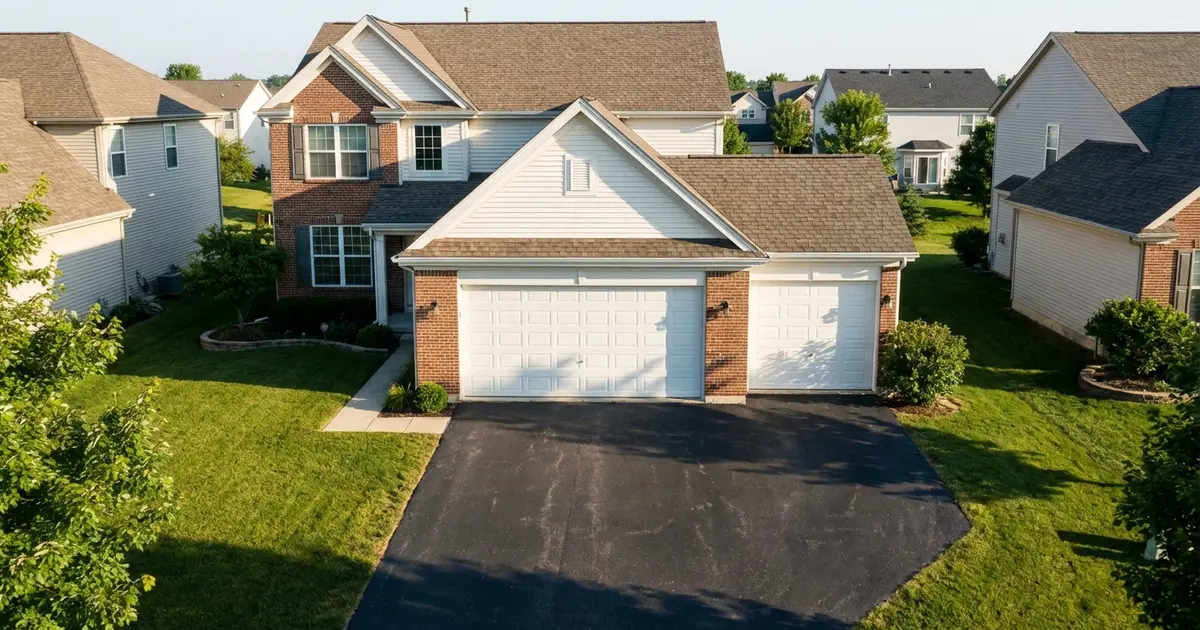
Single vs Double Garage Doors: The Basic Difference
The terms are straightforward, but the implications go further than just "one car" vs "two cars":
Single garage door: A door designed for a one-car opening, typically 8–10 feet wide and 7–8 feet tall. It operates as a single panel system using one set of springs, one track system, and (if motorized) one opener. Single doors are used in one-car garages, tandem garages (cars parked one behind the other), and some two-car garages that have been configured with two separate openings side by side.
Double garage door: A door designed to span a two-car opening, typically 16–18 feet wide and 7–8 feet tall. It uses one set of (larger) torsion springs, one track system across the wider span, and one opener. Everything is scaled up to handle the greater weight and span of the wider door.
The key architectural distinction: a two-car garage can be designed with either one large double-door opening or two separate single-door openings with a structural support pier in the middle. This choice is made during construction (or requires significant renovation to change later).
💡 Pro Tip: If choosing between a 16-ft double and two 9-ft singles, go double if budget is the priority. Go dual-single if you want the flexibility of independent operation (e.g., one car in, one car out simultaneously).
Standard Sizes and Dimensions
Single Garage Door Sizes
| Width | Height | Common Use | Notes |
|---|---|---|---|
| 8 ft | 7 ft | Standard older homes (pre-2000) | Fits compact cars and sedans; tight clearance for trucks/SUVs |
| 9 ft | 7 ft | Modern standard single-car opening | Comfortable clearance for SUVs and full-size trucks |
| 9 ft | 8 ft | Taller vehicle clearance | Better for lifted trucks, vans, and storage above the door |
| 10 ft | 7–8 ft | Wide single or RV/boat storage | Less common; used for oversized vehicles or wide openings |
Double Garage Door Sizes
| Width | Height | Common Use | Notes |
|---|---|---|---|
| 16 ft | 7 ft | Standard two-car double opening | Most common size in American homes |
| 16 ft | 8 ft | Two-car with taller clearance | Preferred in newer construction; handles trucks, vans |
| 18 ft | 7 ft | Wide two-car opening | Less common; found in some newer custom homes |
| 18 ft | 8 ft | Wide two-car, taller clearance | Premium homes; extra side clearance for both vehicles |
How to Measure Your Opening
Before ordering any replacement door, measure the rough opening (the actual framed opening, not the existing door):
- Width: Measure the opening at its widest point, inside the vertical jambs. Measure at the top, middle, and bottom — use the smallest measurement.
- Height: Measure from the floor to the bottom of the header. Measure at both sides — use the smaller measurement.
- Headroom: Measure from the top of the opening to the ceiling (or the lowest obstruction — beams, pipes, etc.). Standard door installation requires at least 10–12 inches of headroom for standard spring systems; low-headroom conversions are available for as little as 4–6 inches but cost more.
- Side room: Measure the horizontal space on each side of the opening (from the door jamb to the nearest wall or obstruction). Standard requirement is 3.75 inches minimum on each side for the vertical tracks.
- Depth: Measure the depth of the garage from the door opening to the back wall — you need at least as much depth as the door is wide for the horizontal tracks to fully retract the door.
For a comprehensive walkthrough, see our how to measure a garage door guide.
✅ Key Takeaway: A double door is cheaper than two singles (one opener, one set of springs, one track). But two singles give more flexibility — one can be open while the other stays closed.
Cost Comparison: Single vs Double Garage Door
These cost ranges represent the full installed price (door + hardware + opener + professional installation) for standard steel doors. Custom materials, specialty windows, and premium finishes add to these figures.
Single Door (Installed)
| Tier | Description | Door + Hardware | Installation | Total Installed |
|---|---|---|---|---|
| Economy | Basic single-layer steel, no insulation | $350–$600 | $200–$350 | $550–$950 |
| Mid-range | Insulated steel (R-6 to R-12), basic style | $600–$1,000 | $250–$400 | $850–$1,400 |
| Premium | Insulated steel (R-12+), carriage style, windows | $1,000–$2,000 | $300–$500 | $1,300–$2,500 |
| Custom/Wood | Real wood, custom size or design | $2,000–$5,000+ | $400–$700 | $2,400–$5,700+ |
Opener sold separately: Add $250–$600 for a quality garage door opener installation.
Double Door (Installed)
| Tier | Description | Door + Hardware | Installation | Total Installed |
|---|---|---|---|---|
| Economy | Basic single-layer steel, no insulation | $600–$900 | $300–$450 | $900–$1,350 |
| Mid-range | Insulated steel (R-6 to R-12), basic style | $900–$1,600 | $350–$500 | $1,250–$2,100 |
| Premium | Insulated steel (R-12+), carriage style, windows | $1,600–$3,500 | $400–$650 | $2,000–$4,150 |
| Custom/Wood | Real wood, custom size or design | $3,500–$9,000+ | $600–$1,000 | $4,100–$10,000+ |
One opener for double: Add $250–$600. Two singles would require two openers: Add $500–$1,200 total.
Two Single Doors vs One Double Door: Total Cost Comparison
| Configuration | Economy | Mid-Range | Premium |
|---|---|---|---|
| One double door + one opener (installed) | $1,150–$1,950 | $1,500–$2,700 | $2,250–$4,750 |
| Two single doors + two openers (installed) | $1,300–$2,500 | $1,900–$3,600 | $2,850–$6,200 |
| Premium over single for two singles | ~$400–$550 more | ~$500–$900 more | ~$600–$1,450 more |
For complete cost context, see our garage door repair and replacement cost guide.
Regional Cost Breakdown
Labor costs vary significantly by region. These are installed mid-range (insulated steel) costs for each configuration:
| Region | Single Door (Installed) | Double Door (Installed) |
|---|---|---|
| Northeast (NY, MA, CT, NJ) | $1,100–$2,000 | $1,600–$3,000 |
| Mid-Atlantic (PA, MD, VA, DC) | $950–$1,800 | $1,400–$2,700 |
| Southeast (FL, GA, NC, SC) | $850–$1,600 | $1,200–$2,400 |
| South Central (TX, OK, LA, AR) | $800–$1,500 | $1,100–$2,200 |
| Midwest (IL, OH, MI, IN, MN) | $875–$1,700 | $1,250–$2,500 |
| Mountain / Southwest (CO, AZ, NV, UT, NM) | $900–$1,750 | $1,300–$2,600 |
| Pacific Northwest (WA, OR) | $1,000–$1,900 | $1,450–$2,800 |
| California | $1,100–$2,200 | $1,600–$3,200 |
Pros and Cons: Single vs Double Garage Door
Single Garage Door
| Pros | Cons |
|---|---|
| Lower per-door cost (but two are needed for two-car garage) | Requires two systems (springs, openers, hardware) for two-car use |
| Independent operation — one door can be open while other is closed | Higher total cost than one double door for two-car configuration |
| If one opener fails, other is still functional | Structural pier between doors uses garage space and limits flexibility |
| Lighter door — easier on springs and opener, longer lifespan | Two maintenance schedules, two openers to program and maintain |
| Architecturally pleasing on wide facades (balanced look) | Installation more complex (two complete setups) |
| Easier to replace one door at a time if needed | Slightly higher total opener cost |
| Structural advantage: center pier provides rigidity | Not available for existing double-door openings without major renovation |
Double Garage Door
| Pros | Cons |
|---|---|
| Lower total cost for two-car garage (one door, one opener) | If opener fails, entire opening is blocked |
| Simpler installation (one setup) | Heavier door — more stress on springs; spring replacement costs more |
| One opener, one remote, one control to program | No center pier = wider unsupported header span (may require heavier beam) |
| Easier to exit/enter with both vehicles simultaneously | Both vehicles must exit/enter through same opening |
| Clean, modern aesthetic on many home styles | Can look too wide/blank on some home facades |
| More interior flexibility (no center pier in garage) | Full door replacement needed even if only one side is damaged |
Structural Considerations
The structural requirements for single vs double door openings differ significantly, and understanding them helps avoid expensive surprises.
The Header: Spanning the Opening
Every garage door opening has a structural header — a beam that spans the width of the opening and carries the weight of the wall and roof above it. The wider the opening, the larger (and more expensive) the header must be:
- 8–9 ft single opening: Typically requires a doubled 2x10 or LVL (laminated veneer lumber) beam — standard and inexpensive.
- 16 ft double opening: Requires a significantly larger LVL or engineered wood beam, or a steel I-beam, to span the 16-foot gap. This is a meaningful structural element that must be properly sized — undersized headers can sag, crack, or fail over time.
- 18 ft double opening: Even more substantial header required; often requires an engineer's specification in jurisdictions with strict building codes.
Foundation and Side Load Points
A double-door opening concentrates all the load at two points (the jamb posts on each side). A two-single-door configuration distributes load across three points (two side jambs plus the center pier). For many garage designs, particularly those with heavy concrete or clay tile roofs, the center pier is a structural advantage.
Headroom and Sideroom
Both single and double doors require the same minimum clearances relative to the opening size:
- Headroom (standard springs): 10–12 inches above the door opening to the ceiling or first obstruction.
- Headroom (low-clearance conversion): 4–6 inches minimum (available with special hardware at extra cost — typically $100–$200 additional).
- Sideroom: Minimum 3.75 inches on each side of the opening for track mounting (more is always better).
- Backroom (depth): The horizontal section of track must extend into the garage at least as far as the door is tall, plus clearance for the opener unit if installed.
Spring Systems
Double doors require heavier-duty springs to counterbalance their greater weight. A standard 7x16 steel double door typically weighs 130–175 lbs, compared to 80–110 lbs for a 7x9 single door. Heavier springs cost more to replace (typically $300–$450 for a double-door spring replacement vs. $200–$300 for a single). See our torsion vs extension spring guide for spring type details.
Opener Requirements: Single vs Double Door
Garage door opener capacity is rated in horsepower (HP), and the right rating depends on door weight and type:
| Door Configuration | Recommended Opener HP | Opener Cost (Installed) |
|---|---|---|
| Single door, single-layer steel | ½ HP | $250–$450 |
| Single door, insulated steel | ½ HP (⅔ HP preferred) | $300–$500 |
| Single door, wood or heavy custom | ¾ HP | $350–$550 |
| Double door, single-layer steel | ½ HP minimum; ¾ HP preferred | $300–$550 |
| Double door, insulated steel | ¾ HP | $350–$600 |
| Double door, wood or heavy custom | 1 HP or screw/jackshaft drive | $450–$750 |
For two single doors, you'll need two complete opener systems — two motors, two rails, two wall buttons (though both can typically be controlled from a single multi-door keypad). For a double door, one opener handles the entire width.
Drive type (chain, belt, screw, direct drive) is separate from the single/double decision. See our garage door opener types guide for a full comparison of drive systems.
Converting Between Configurations
Converting a Double Opening to Two Singles
This is the more common conversion request — homeowners with a dated 16-foot double door want to upgrade to the look of two single doors, or they want the operational independence. What's involved:
- Structural assessment: A structural engineer or licensed contractor must evaluate whether the existing header can be modified or replaced with two shorter headers. Cost: $300–$800 for engineering assessment.
- Center pier construction: A new support post (pier) must be built in the center of the opening. Depending on your garage's framing and foundation, this may be straightforward framing or may require a concrete footing. Cost: $800–$2,500 for framing and finishing.
- New headers: Each new single opening needs its own properly sized header. Cost: included in framing work above.
- Drywall, exterior finishing: The new pier needs to be finished on the inside (drywall/paint) and outside (matching siding or stucco). Cost: $300–$800.
- Two new doors + two openers: The new doors and openers themselves (see cost tables above).
Total conversion cost: $3,500–$8,000+ depending on region, structure, and door/opener selection — on top of the cost of the doors themselves.
Converting Two Singles to One Double
Removing the center pier to create one large double opening is structurally more complex because you're removing a load-bearing element. This always requires engineering review and typically a permit. The existing header must be replaced with a longer, heavier beam to span the wider opening. Cost for this structural work alone: $2,000–$6,000+. This conversion is generally only justified for major renovations or when the architectural change is a priority.
Curb Appeal and Home Value Impact
The garage door is often the largest single visual element on the front of a home — on many American homes, the garage facade comprises 30–40% of the total front elevation. The choice between one double door and two single doors has a meaningful impact on the home's appearance.
Architectural Guidelines
Design professionals generally recommend:
- Two single doors look best on: traditional/craftsman homes, wide facades with garage set at an angle or recessed, homes where vertical lines are a design element, and higher-end homes where the details matter.
- One double door looks best on: contemporary/modern homes, homes where horizontal lines are emphasized, garages that are recessed and less prominent, and where simplicity is the design goal.
- Either works well on: Ranch-style homes, most Colonial and suburban homes of the 1980s–2010s, and any home where the door is being matched to existing architecture.
ROI on Garage Door Replacement
According to Remodeling Magazine's annual Cost vs Value report, garage door replacement consistently ranks among the highest-ROI home improvement projects — typically returning 85–100% of costs at resale. An attractive, well-maintained door of either configuration contributes positively to resale value; a dated or damaged door depresses it.
The material and style of the door matters more to curb appeal than single vs double:
- Carriage-house style with windows adds charm on traditional homes
- Flush contemporary panels look sharp on modern homes
- Wood grain texture steel offers warmth without maintenance of real wood
- Color match to the home's trim or front door creates visual cohesion
For detailed material comparisons, see our wood vs steel vs aluminum guide.
Material Options and Their Impact on Single vs Double Choice
| Material | Weight per sq ft | Impact on Double Door Choice | Typical Cost Premium |
|---|---|---|---|
| Single-layer steel (uninsulated) | 1–1.5 lbs/sq ft | Fine for double; lightweight | Baseline |
| Double-layer insulated steel | 1.5–2 lbs/sq ft | Fine for double; slightly heavier spring needed | +$200–$500 |
| Triple-layer insulated steel | 2–2.5 lbs/sq ft | Heavier double door; ensure ¾ HP+ opener | +$400–$900 |
| Aluminum (single-layer) | 0.8–1.2 lbs/sq ft | Good for double; lightweight and rust-resistant | +$100–$300 |
| Wood (solid) | 4–8 lbs/sq ft | Heavy double door; requires 1 HP opener minimum; higher spring costs | +$1,500–$5,000+ |
| Wood composite | 2–4 lbs/sq ft | Heavier than steel; ¾ HP+ opener recommended | +$800–$2,500 |
| Glass/aluminum (modern) | 3–5 lbs/sq ft | Very heavy for double; professional sizing required | +$2,000–$8,000+ |
Material weight is an important consideration for double doors specifically: a 16x7 solid wood door can weigh 350–500 lbs, compared to 130–175 lbs for a steel insulated double door. This weight affects spring sizing, opener motor requirements, and long-term maintenance costs.
DIY vs Professional Installation
What Professionals Strongly Recommend Against DIY
Garage door installation is one of the home improvement tasks where professional installation is almost always the right choice, for several concrete reasons:
- Spring installation is dangerous: Torsion springs are under extreme tension — enough to cause serious injury if mishandled. Professional installers have the specialized winding bars and training required. This alone justifies professional installation for most homeowners.
- Structural considerations: Improper header support, track mounting, or opener attachment can create unsafe conditions that aren't apparent until the door fails unexpectedly.
- Warranty requirements: Most door manufacturers require professional installation to maintain the product warranty. DIY installation voids many warranties.
- Weight and logistics: A 16-foot double door involves heavy, awkward panels that are difficult to handle safely without proper equipment and an experienced crew.
What Homeowners Can Realistically DIY
- Removing an old door once springs are already released (by a pro, or with proper training)
- Installing a pre-hung door kit (some manufacturers sell complete DIY kits with extension springs pre-configured — lower risk than torsion spring systems)
- Installing the opener once the door itself is hung by a professional
- Programming remotes and keypads
- Finishing work: painting, hardware installation on existing installed door
Cost of Professional Installation (Labor Only)
| Service | Labor Cost Range |
|---|---|
| Single door installation (customer provides door) | $150–$300 |
| Double door installation (customer provides door) | $200–$400 |
| Complete single door replacement (door + installation) | $550–$2,500+ |
| Complete double door replacement (door + installation) | $900–$4,200+ |
| Opener installation only (customer provides opener) | $100–$200 |
Decision Framework: How to Choose
Use this framework to narrow your decision:
Choose a Double Door if:
- You have an existing 16-foot (or larger) single opening — this is the simplest replacement
- Budget is a primary concern — one double door + one opener is almost always cheaper than two singles
- Your garage is used primarily as a vehicle storage space (both vehicles park simultaneously and leave simultaneously)
- You prefer a modern, clean aesthetic without a center pier
- You want the simplest installation and single-system maintenance
Choose Two Single Doors if:
- Your existing garage was built with two separate single-door openings (structural pier already in place)
- Household members have different schedules and one door is frequently used without the other
- Redundancy matters — you want one door always functional even if the other fails
- Your home's architecture calls for the two-door look (traditional, craftsman, colonial)
- You're willing to pay more for the operational and aesthetic benefits
Quick Decision Guide
| Situation | Recommendation |
|---|---|
| Replacing existing double door, same opening | Double door — simplest, most cost-effective |
| Replacing existing two singles, same openings | Two singles — structural framing already done |
| New construction, two-car garage | Two singles (preferred architecturally and structurally) |
| Tight budget, two-car garage | Double door — saves $400–$1,000+ vs two singles |
| One car at home, one car used frequently | Two singles — independent operation |
| Traditional home aesthetic | Two singles |
| Modern/contemporary home | Either works; double door often cleaner visually |
| Maximum security/redundancy | Two singles — each has independent locking and operation |
Find a Garage Door Pro Near You
Whether you're replacing a single door, upgrading to a double, or navigating a conversion, a local professional can assess your specific opening, recommend the right door and opener, and provide a free installation quote.
- Find trusted garage door pros in Phoenix
- Find trusted garage door pros in Denver
- Find trusted garage door pros in Atlanta
- Find trusted garage door pros in Seattle
- Find trusted garage door pros in Minneapolis
Or browse all cities to find technicians in your area.
Frequently Asked Questions
What is the standard size of a single garage door?
Standard single garage doors are 8 feet wide by 7 feet tall — this is the most common size installed in homes built through the 1990s. A slightly wider 9x7 size has become more common since the 2000s as trucks and SUVs have grown larger. Height options of 8 feet (taller clearance for trucks, vans, or added storage) are also available. Non-standard heights of 9 or 10 feet exist for commercial or specialty applications. If you're replacing an existing door, always measure your current opening first — older homes may have non-standard sizes. Width is measured at the widest point of the opening; height is measured from the floor to the top of the opening header.
What is the standard size of a double garage door?
Standard double (two-car) garage doors are 16 feet wide by 7 feet tall. This size fits most two-car garage openings and is the industry default. A 16x8 is also common for homes with higher clearance needs or taller vehicles. Wider openings (18 feet) do exist, but true 18-foot doors are less common — many architects design a 16-foot opening even in wider garages. As with single doors, always measure the actual opening before ordering. The width of a double door opening is usually not exactly double that of a single — the structural header, jamb framing, and garage configuration all factor in. When in doubt, a professional measurement is worth the time.
Is it cheaper to get two single doors or one double door?
Two single doors typically cost more upfront than one double door because they require two complete door systems — two sets of springs, two sets of hardware, two openers, and double the installation labor. A single 16-foot double door uses one set of (larger) springs and one opener, which is more economical per square foot of opening. However, two single doors offer operational advantages: if one opener fails, the other still works; each door can be opened independently; and they're structurally easier to support with the wall pier between them. For new construction, two singles are often preferred architecturally and structurally, even if the cost is slightly higher. For a like-for-like comparison on a standard two-car garage: expect to pay roughly $200–$600 more total for two singles vs one double, including hardware and installation.
Can I replace a double garage door with two single doors?
Converting a double-door opening to two single doors requires adding a structural support post (pier) between the two openings. This is a significant structural modification — the center post must carry the weight that the header above the current 16-foot opening spans. This work typically requires a structural engineer's assessment, permits, and skilled carpentry or masonry work. It's not a DIY project. Costs for the structural modification alone can run $1,500–$4,000 or more, depending on your garage's construction, before adding the cost of the two new doors, hardware, tracks, and openers. The conversion may also require changes to the garage framing, drywall, and exterior siding. The reverse — converting two singles to one double — has similar challenges. Both conversions are viable, but treat them as significant renovation projects, not simple door swaps.
Which is better for home value: a single or double garage door?
For homes with a two-car garage, one well-designed double door or two matching single doors both add strong curb appeal and resale value — the NAR consistently ranks garage door replacement as one of the highest-ROI home improvements (often returning 90%+ of cost). What matters more than single vs. double configuration is the door's condition, style, and whether it matches the home's architecture. A matching pair of attractive single doors can enhance a facade more than a plain double door. For a true single-car garage, a single door is the only appropriate configuration. If you're building new and have flexibility, two single doors are generally preferred by homebuyers in the current market because they offer flexibility (each door operates independently) and tend to look more proportional on wider garage facades.
How long does garage door installation take?
A standard garage door installation — removing the old door and installing a new one of the same size — typically takes 3–5 hours for a single door and 4–6 hours for a double door when performed by a professional crew of two. This includes removing the old door, installing new panels, setting up the new track system, installing springs, attaching the opener, and testing operation. Custom orders (non-standard sizes, wood doors, decorative hardware) may add lead time for manufacturing — typically 2–6 weeks from order to installation for custom doors vs. in-stock standard doors which can often be installed within 1–3 days. If your project involves structural changes (widening or narrowing the opening), add another 1–2 days of framing work before the door installation.
Do I need two openers for two single garage doors?
Yes — each single garage door requires its own opener. The opener is mechanically attached to one door via the drive rail and trolley; it can't operate two doors simultaneously. If you have two single doors, you'll need two openers, two rails, and two sets of wall buttons (though you can program both openers to a single keypad unit). Some homeowners see this as a disadvantage vs. one double door with one opener, but the operational benefit is significant: if one opener fails, breaks, or needs service, the other door remains fully functional. Also, both occupants of the home can enter and exit simultaneously. Starter-tier openers (chain drive) are now available for $150–$250, so the cost of the second unit is manageable, especially compared to the convenience benefit.